From Food Science to Coherent Nourishment
Abstract
Food is commonly understood through separate categories such as nutrition, chemistry, biology, agriculture, health, sustainability, and consumer preference. Contemporary food science demonstrates, however, that these dimensions are deeply interconnected. The work of David Julian McClements, Distinguished Professor of Food Science at the University of Massachusetts Amherst, provides an important foundation for examining these relationships through food colloids, emulsions, delivery systems, food nanotechnology, plant-based foods, and the health and sustainability of food processing. (UMass Amherst)
This article interprets selected themes in McClements’ research through the Stathine–Coexon Framework. It proposes that food should be understood not merely as a material consumed by an individual, but as a relational system connecting molecular structure, biological processes, human health, culture, economics, and ecological conditions. The article does not claim that McClements endorses the Stathine–Coexon Framework. Instead, it develops a conceptual dialogue between established food science and a proposed ontological framework concerned with coherence, contained existence, truth compression, and progressive reduction of contradiction.
Keywords: David Julian McClements, food science, food structure, nutrition, sustainability, food systems, Stathine–Coexon Framework, coherence, holobiont, food technology
1. Introduction: Food as More Than Substance
Human beings often discuss food through simplified questions:
Is it healthy or unhealthy?
Is it natural or processed?
Is it plant-based or animal-based?
Is it traditional or modern?
Is it affordable or expensive?
Is it sustainable or unsustainable?
These distinctions are useful, but they can become misleading when treated as complete descriptions of reality. A food may be minimally processed yet nutritionally unbalanced. A highly processed food may be designed to improve safety, shelf life, digestibility, or nutrient delivery. A plant-based product may reduce some environmental pressures while introducing other nutritional, economic, or processing challenges.
Food therefore cannot be understood adequately through a single characteristic.
David Julian McClements’ research illustrates the importance of examining food through its structure, composition, physical properties, biological interactions, and intended function. His work addresses food biopolymers and colloids, emulsions, delivery systems, gastrointestinal fate of nutrients and nutraceuticals, plant-based foods, and food nanotechnology. His research group seeks to understand the molecular and colloidal basis of food properties, including texture, flavour, appearance, shelf life, and nutrition. (UMass Amherst)
The Stathine–Coexon Framework provides a conceptual lens through which these contributions can be connected to a broader question:
How can humanity design food systems that are coherent with biological needs, human flourishing, social relationships, and ecological continuity?
This question extends beyond food composition. It concerns the relationship between what humanity knows, what it produces, what it consumes, and the consequences generated by those activities.
2. McClements’ Food Science: Understanding Structure, Function, and Biological Fate
A major contribution of contemporary food science is the recognition that the nutritional effect of a food depends not only on the substances it contains, but also on how those substances are organised and released.
Food is a complex material system. Proteins, lipids, carbohydrates, minerals, water, and bioactive compounds interact through physical and chemical structures. These structures influence taste, texture, stability, digestibility, nutrient release, and the way food components behave within the gastrointestinal system.
McClements’ research into food emulsions and colloidal systems examines how food structures can be designed to influence these properties. His work on emulsion design, for example, considers how food structures may improve the delivery of functional lipophilic components. (PubMed)
A lipid-soluble nutrient may possess potential biological value, but its practical effect can be limited by poor water solubility, instability, unpleasant taste, or low bioavailability. Research into food matrices and delivery systems attempts to address these limitations through structural design. (PubMed)
This provides an important starting point for the Stathine–Coexon Framework.
The framework distinguishes between the presence of information and the successful integration of information into a functioning system. In food science, the presence of a nutrient does not automatically guarantee that the body can absorb, process, or use it effectively. The nutrient must exist within a structure and context that enable its biological availability.
A parallel can be drawn with human understanding. Information may be present in a person’s memory, yet remain functionally unavailable because it has not been integrated into a coherent model. Similarly, a food may contain valuable components whose potential is limited by the structure through which they are delivered.
This analogy should be understood as a conceptual comparison, not as a claim that food colloids and human cognition operate through identical mechanisms.
The broader principle is:
Value is not determined solely by what is present, but also by how elements are organised, connected, released, and integrated into a larger system.
3. From Food Components to Relational Coherence
The Stathine–Coexon Framework proposes that existence is relational and that every entity is contained within wider systems. Its Axiom of Contained Existence describes a progression:
Containment → Relationship → Condition → Experience → Understanding → Coherence
Food provides a concrete example of this relational sequence.
A seed exists within soil, climate, microbial relationships, agricultural practices, and economic systems. A crop becomes an ingredient through cultivation, harvesting, processing, transportation, and distribution. The ingredient enters a food product whose structure influences its storage, taste, digestibility, and nutritional characteristics. The food is then consumed by a human being whose biological condition, gut microbiome, metabolism, and broader lifestyle influence its effects.
Food is therefore not an isolated object. It is part of a chain of relationships.
This perspective is compatible with a systems-oriented interpretation of food science, although the Stathine–Coexon Framework extends the inquiry into an ontological and ethical direction.
The relevant question is no longer simply:
“What does this food contain?”
It becomes:
“What relationships allow this food to be produced, understood, delivered, consumed, and integrated into human and ecological life?”
This expanded inquiry includes several dimensions:
Material coherence: Are the ingredients and structures stable and functionally appropriate?
Biological coherence: How does the food interact with digestion, metabolism, and physiological needs?
Nutritional coherence: Does the product’s composition align with its health-related claims and intended use?
Economic coherence: Is the food accessible, affordable, and commercially viable?
Ecological coherence: What are the consequences of production, packaging, transportation, and waste?
Cultural coherence: Does the food respect local preferences, traditions, and patterns of consumption?
A product can perform well in one dimension while generating contradictions in another. The challenge is to examine the entire system rather than celebrating isolated technical achievements.
4. Food Processing: Moving Beyond the Natural-versus-Artificial Dichotomy
Public discussions about food frequently rely on a binary opposition:
Natural food is good; processed food is bad.
This distinction is attractive because it is simple. However, it can conceal important differences between processing methods, ingredients, nutritional profiles, food structures, and consumption patterns.
Processing may improve safety, increase shelf life, reduce food waste, improve convenience, or enable the delivery of nutrients and bioactive compounds. At the same time, certain processing methods and formulations may contribute to undesirable nutritional or metabolic outcomes, depending on the product and the context of consumption.
McClements’ work on food processing and his book Beyond the Ultra-processed Label: The Science Behind Food Processing and Health reflect the importance of examining food processing through scientific mechanisms rather than relying exclusively on broad labels. His research interests include the creation of healthier processed foods. (UMass Amherst)
Through the Stathine–Coexon Framework, the central issue can be expressed as a problem of incomplete classification.
The question should not be:
“Is this food processed?”
It should be:
“What processing occurred, why was it used, what properties did it change, and what consequences may follow from the resulting product?”
This does not mean that all processed foods are equally beneficial or that concerns about ultra-processed foods are unfounded. It means that meaningful evaluation requires attention to composition, structure, dose, dietary context, manufacturing purpose, and evidence.
The framework’s Epistemology of Knowledge, Coherence, Evidence, and the Progressive Reduction of Human Delusion provides a basis for distinguishing:
- Observed properties.
- Scientific interpretations.
- Health-related claims.
- Broader ontological or ethical conclusions.
A food label or category should not replace investigation. Nor should a technological innovation be assumed to be beneficial merely because it is novel.
The aim is to reduce contradiction between what a product is claimed to achieve and what evidence demonstrates.
5. Food Architecture and the Principle of Truth Compression
The Stathine–Coexon concept of Truth Compression proposes that accurate and coherent representations can reduce the need to maintain contradictory explanations. Applied to food science, this principle suggests that better understanding of food structure may reduce the gap between intended function and actual performance.
Consider a food product designed to deliver a bioactive compound. A simplified evaluation might focus on the quantity of the compound added to the product. A more complete evaluation would examine:
- Whether the compound remains stable during processing and storage.
- Whether it is released at the appropriate stage of digestion.
- Whether it remains bioavailable.
- Whether the intended biological effect is supported by evidence.
- Whether the delivery system introduces other risks or trade-offs.
Each additional question reduces the possibility of confusing ingredient presence with functional effectiveness.
This is a form of truth compression in a conceptual sense: a more accurate model can integrate several observations that otherwise appear disconnected.
McClements’ research on delivery systems examines ways to improve the stability, dispersibility, and bioavailability of food components. (PubMed)
The Stathine–Coexon interpretation does not suggest that every complex food system should be reduced to a simple explanation. Rather, it encourages the development of models that explain more relationships with fewer unnecessary contradictions.
In practical terms, food innovation should not be judged only by whether it adds a desirable ingredient. It should be evaluated by whether the entire product system supports the intended nutritional and functional purpose.
6. Food, the Holobiont, and Human Health
The Stathine–Coexon Framework places the human being within a holobiont context, recognising that human life involves interactions among the body, microorganisms, environment, and broader biological systems.
This perspective invites a more integrated understanding of nutrition. Food does not interact with an abstract human consumer. It enters a living system with a particular physiological condition, dietary history, microbiome, metabolic profile, age, activity level, and social environment.
McClements’ research includes the gastrointestinal fate of nutrients and nutraceuticals, as well as the development of food structures intended to influence bioactive delivery. (UMass Amherst)
This research area is especially relevant to the framework because it demonstrates that the relationship between food and health is not always linear. The effect of a compound depends partly on the conditions through which it is delivered and processed by the body.
A coherent nutritional approach must therefore avoid simplistic assumptions such as:
- More of a nutrient is always better.
- A compound’s presence guarantees its benefit.
- A food’s marketing category establishes its health effect.
- A single dietary intervention produces identical results for everyone.
The framework’s principle of progressive reduction of contradiction can encourage a more responsible approach to nutritional communication. Health claims should be aligned with the strength of available evidence, and uncertainty should be communicated rather than concealed.
This is particularly important because consumers often receive food information through advertising, social media, simplified health advice, and conflicting expert opinions.
A coherent food system must support not only the production of food, but also the development of accurate public understanding.
7. Plant-Based Foods and the Question of Sustainable Nourishment
The transition toward more sustainable food systems requires innovation across ingredients, production methods, consumer preferences, and supply chains.
McClements’ research includes healthier and sustainable next-generation plant-based foods, including meat, seafood, egg, and dairy analogues. His work addresses the design, production, and properties of these foods. (UMass Amherst)
The Stathine–Coexon Framework can contribute a systems perspective to this field by asking whether a food innovation improves coherence across multiple dimensions.
For example, a plant-based product may be assessed through:
Nutritional adequacy: Does it provide appropriate protein, micronutrients, and other relevant dietary characteristics?
Sensory functionality: Does its taste, texture, and appearance support consumer acceptance?
Resource use: What are the agricultural, water, energy, and material requirements?
Affordability: Can the product be accessed by populations with different economic capacities?
Cultural suitability: Does it fit diverse food traditions and preferences?
Long-term effects: What consequences may emerge from its ingredients, processing, packaging, and consumption patterns?
The purpose is not to declare one food category universally superior. Rather, it is to avoid reducing sustainability to a single variable.
The framework’s Stathine–Coexon Economics and Doughnut Economics offers a related approach by connecting human needs with ecological boundaries and economic organisation.
Food sustainability can be understood as a problem of maintaining nourishment and human well-being without undermining the systems that make future nourishment possible.
This requires technological innovation, but also institutional responsibility and informed consumer choice.
8. The Contradiction Between Food Innovation and Food Inequality
Scientific innovation does not automatically produce social benefit.
A new delivery system, healthier formulation, or advanced plant-based product may demonstrate technical promise while remaining inaccessible to large populations because of cost, distribution limitations, intellectual property arrangements, or infrastructure requirements.
This creates a possible contradiction:
Humanity may develop increasingly sophisticated methods for improving food quality while many people remain unable to access adequate nourishment.
The Stathine–Coexon Framework’s axiological perspective asks how scientific and commercial achievements relate to human flourishing. Its Axiology of the Stathine–Coexon Framework examines truth, value, transparency, inclusiveness, and coexistence.
From this perspective, the value of food science cannot be measured exclusively by technical novelty or commercial profitability. These remain important, but they should be considered alongside accessibility, safety, nutritional benefit, and wider consequences.
This does not imply that researchers alone can resolve food inequality. Food access is shaped by governance, economic structures, infrastructure, conflict, climate, education, and cultural conditions.
However, food science can contribute to a more coherent food system when innovation is developed with these realities in view.
The relevant question becomes:
“How can scientific capability be connected to the conditions required for people to benefit from it?”
9. From Optimisation to Resilience
Modern food production frequently prioritises efficiency, productivity, cost reduction, consistency, and scale. These objectives can be valuable, but excessive optimisation may reduce resilience.
A system designed for maximum efficiency under stable conditions may become vulnerable when confronted with climate disruptions, supply-chain failures, ingredient shortages, disease outbreaks, or sudden changes in consumer demand.
The Stathine–Coexon Framework’s interest in coherence encourages attention to the relationship between efficiency and adaptability.
This connects with the framework’s discussion of Olivier Hamant’s work in Robustness Beyond Optimization.
Food systems require both optimisation and resilience. A product that is inexpensive but dependent on fragile supply chains may not be coherent over the long term. Similarly, a production method that maximises short-term output while degrading soil, water, biodiversity, or worker well-being may transfer costs into the future.
A resilient food system should be able to:
- Adapt to changing conditions.
- Maintain essential functions during disruption.
- Learn from failure.
- Diversify resources and supply chains.
- Protect ecological and biological foundations.
- Preserve sufficient flexibility for innovation.
The goal is not to reject efficiency. It is to place efficiency within a broader model of long-term viability.
10. Food Science and the Expansion of Human Understanding
The Stathine–Coexon Framework proposes that human development involves the progressive reduction of contradictions in understanding and action.
Food science offers an important example of how knowledge can evolve. Earlier approaches may have focused primarily on food composition, while later research increasingly examines structure, digestion, bioavailability, sensory properties, sustainability, and personalised physiological responses.
This does not mean that earlier knowledge was useless. Rather, new understanding can reveal limitations in earlier models and integrate previously separated dimensions.
The process can be represented as:
Composition → Structure → Function → Biological interaction → Human outcome → Systemic consequence
Each stage expands the inquiry.
A food component is not fully understood when its chemical identity is known. Its significance also depends on its structure, stability, biological fate, consumption context, and relationship to human and environmental systems.
This is consistent with the Stathine–Coexon Framework’s broader argument in The Stathine–Coexon Framework as an Integrative Meta-Framework for Human Understanding.
The framework does not replace food science. It asks whether knowledge from food science can be integrated with other domains without losing scientific precision.
Its contribution is primarily organisational and philosophical: to encourage researchers, producers, policymakers, and consumers to examine how different forms of understanding relate to one another.
11. Toward a Coherent Food Research Agenda
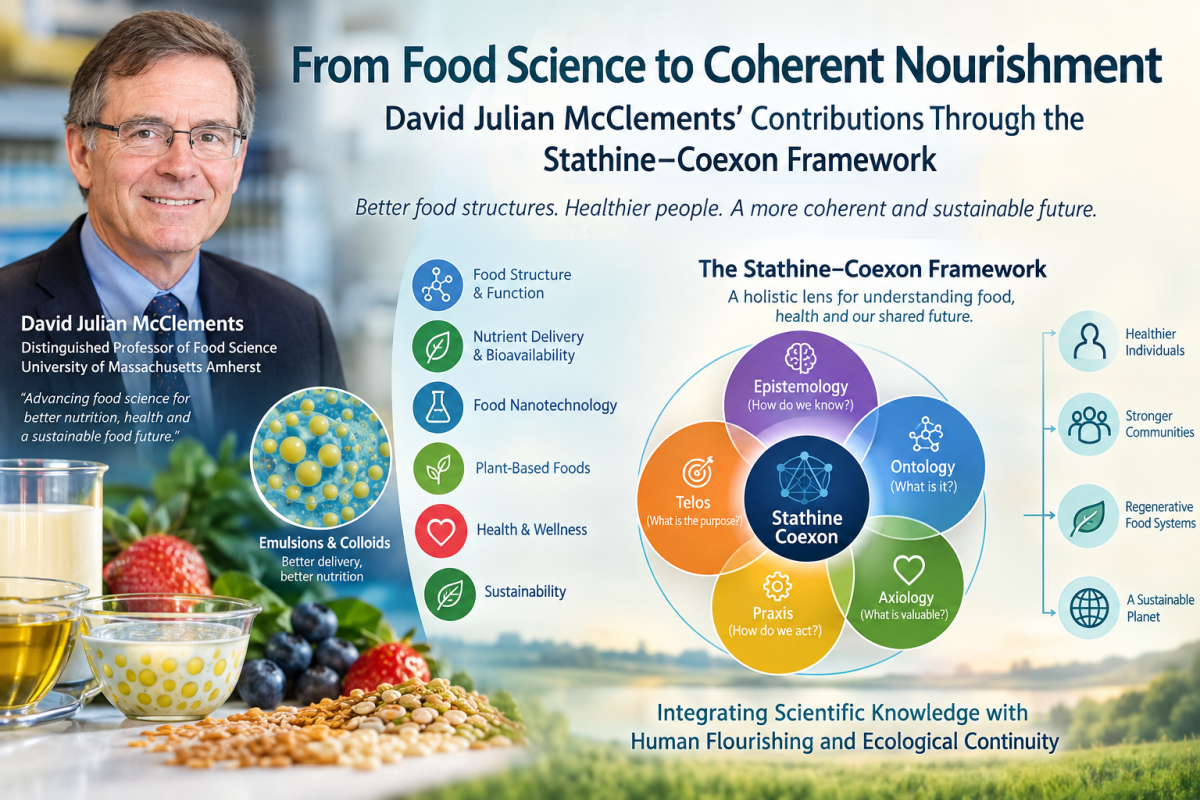
A future research agenda inspired by this dialogue could examine food through five connected dimensions.
Epistemology: How Do We Know?
Research should distinguish between measured food properties, laboratory findings, clinical evidence, population-level observations, and commercial claims.
The question is not simply whether a claim sounds plausible, but what evidence supports it and what limitations remain.
Ontology: What Is Food?
Food can be understood as a material, a biological interface, a cultural object, an economic product, and a component of ecological systems.
The ontological question concerns how these dimensions relate without being reduced to one another.
Axiology: What Makes Food Valuable?
Food value includes nutrition, safety, pleasure, affordability, cultural meaning, sustainability, and accessibility. These values may sometimes conflict and require transparent evaluation.
Praxis: How Should Food Be Designed and Produced?
Research findings should be connected to responsible formulation, manufacturing, distribution, communication, and consumption.
The framework’s Praxis of the Stathine–Coexon Framework provides a cycle of observation, evaluation, action, feedback, and revision.
Telos: What Is the Purpose of Food Innovation?
Food innovation should be examined in relation to human nourishment, health, resilience, inclusion, and ecological continuity.
The purpose is not to impose one universal dietary model, but to improve the coherence between food production and the conditions of human flourishing.
12. Limitations and Methodological Caution
A responsible interdisciplinary interpretation must maintain clear distinctions.
First, McClements’ established research in food science should not be presented as evidence for Stathine or Coexon. His work is grounded in scientific research involving food structures, physicochemical processes, nutrition, and food technology.
Second, conceptual parallels between food structure and human understanding do not establish that the two systems operate through identical principles.
Third, the Stathine–Coexon Framework’s claims about Stathine as an unbroken field and Coexon as a proposed sentient atom are supporting and bieng supported by scientific findings.The framework is expanding the definition of science as well as ways of establishing truths. They are the ways ahead in these times where silos are not working for humanity as a whole.
Fourth, coherence alone does not guarantee truth. A model can be internally consistent and still fail to describe reality accurately. This is why the framework’s epistemological dimension must remain connected to evidence, critical examination, and openness to revision.
These limitations do not prevent interdisciplinary inquiry. They establish the conditions under which such inquiry can remain intellectually responsible and practically useful.
Conclusion: From Food Technology to Coherent Nourishment
David Julian McClements’ work demonstrates the importance of understanding food through its structure, functionality, biological interactions, and potential contribution to healthier and more sustainable food systems. His research in emulsions, colloids, nutrient delivery, food nanotechnology, and next-generation foods provides a foundation for examining how scientific design can influence the relationship between food and human health. (UMass Amherst)
The Stathine–Coexon Framework extends this inquiry by asking how food science can be connected to a broader understanding of relational existence, human flourishing, and ecological continuity.
Its central contribution is not a replacement for scientific food research. It is an invitation to integrate scientific knowledge with wider questions:
Does the food we design align with the biological needs, social realities, and ecological conditions that sustain human life?
The future of food may depend not only on discovering new ingredients or developing more advanced processing technologies, but also on improving the coherence among scientific knowledge, industrial practice, consumer understanding, and planetary responsibility.
Food innovation becomes more meaningful when it does more than produce new products. It should help humanity develop a more accurate understanding of nourishment and create systems through which that understanding can be responsibly expressed.
The future of food science is not merely the engineering of what humans eat. It is the progressive development of coherent relationships among food, body, society, and the living world.
Selected References and Further Reading
- David Julian McClements — University of Massachusetts Amherst
- Emulsion Design to Improve the Delivery of Functional Lipophilic Components
- Designing Food Structure and Composition to Enhance Nutraceutical Bioactivity
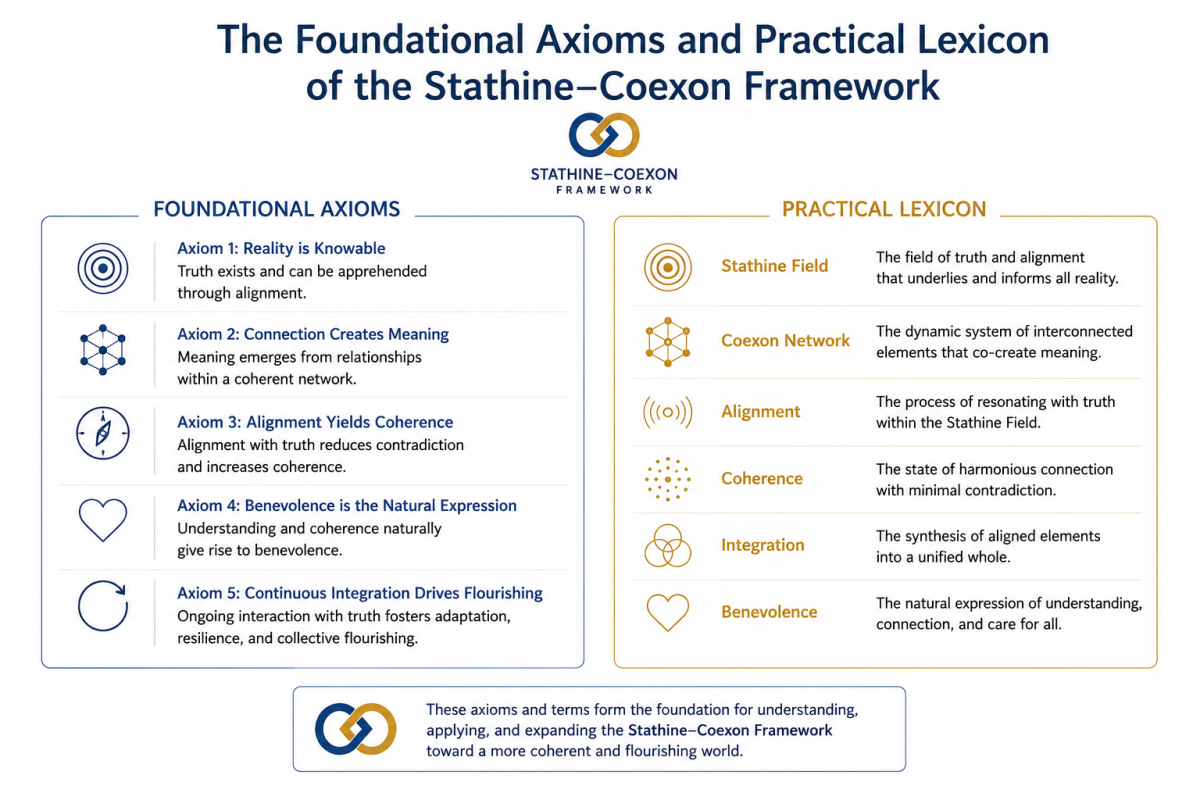
- The Foundational Axioms and Practical Lexicon of the Stathine–Coexon Framework
- The Axiom of Contained Existence
- The Stathine–Coexon Framework as an Integrative Meta-Framework
- Stathine–Coexon Economics and Doughnut Economics