The societal change possible

Sam Harris has become one of the most influential contemporary voices exploring:
- consciousness,
- meditation,
- free will,
- suffering,
- rational inquiry,
- and the future of human cooperation.
Through books such as Waking Up and his meditation platform Waking Up, Harris attempts to bridge:
- neuroscience,
- contemplative traditions,
- philosophy,
- and practical human wellbeing.
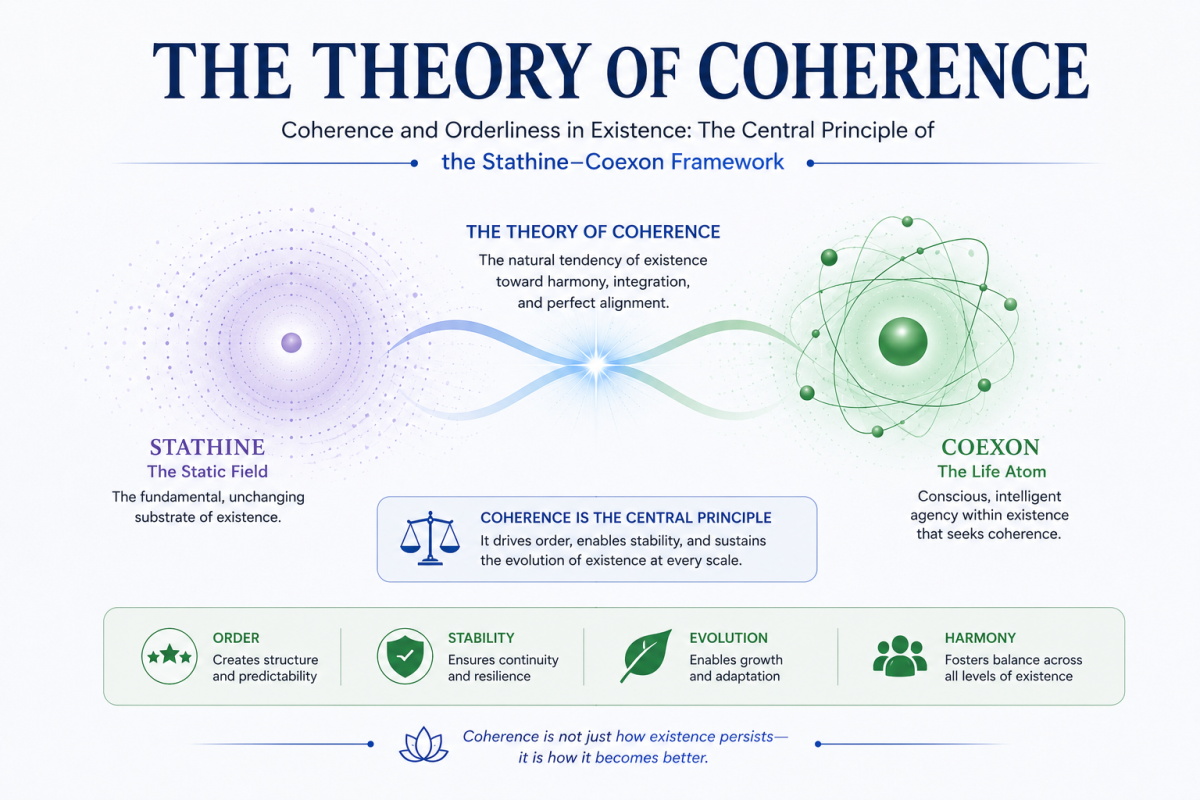
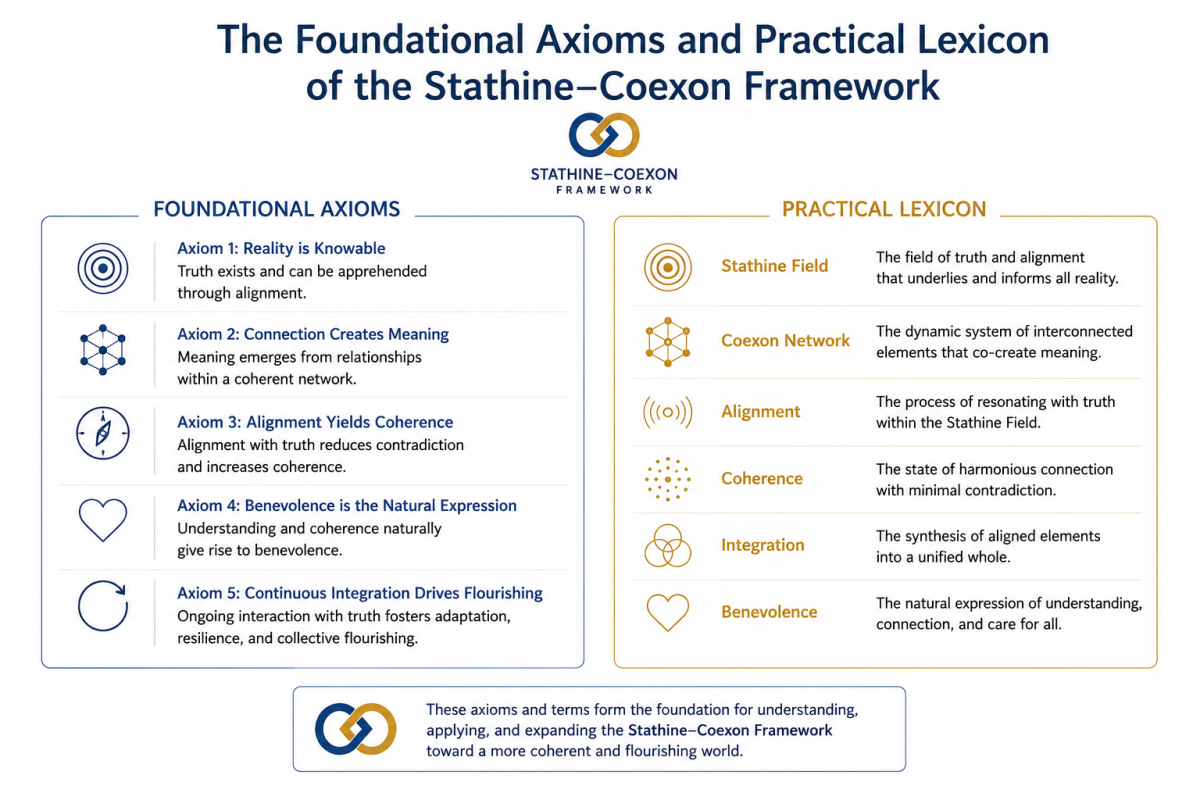
Many of his central insights strongly complement the Stathine–Coexon framework because both approaches emphasize:
- awareness over unconscious reactivity,
- reduction of internal contradiction,
- conscious observation of thought,
- and emergence of coherent human cooperation.
1. Consciousness as the Central Mystery
Sam Harris repeatedly emphasizes that:
consciousness is the most important and least understood feature of human existence.
Like many thinkers discussed in your framework:
- Harris questions strict reductionism,
- while remaining deeply committed to scientific rigor.
He argues that:
- subjective experience,
- the feeling of being aware,
- and the sense of self
cannot simply be ignored in scientific understanding.
This aligns closely with the Stathine proposal:
consciousness is not merely an accidental side effect of matter,
but a fundamental dimension of relational existence.
2. The Illusion of the Fixed Self
One of Harris’s most important ideas is:
the self most people feel themselves to be is largely a constructed process.
Through meditation and introspection, Harris argues humans can observe:
- thoughts appearing automatically,
- emotions arising spontaneously,
- and identity functioning as a dynamic process rather than a permanent entity.
This strongly parallels metacognition.
The Stathine–Coexon framework interprets this as:
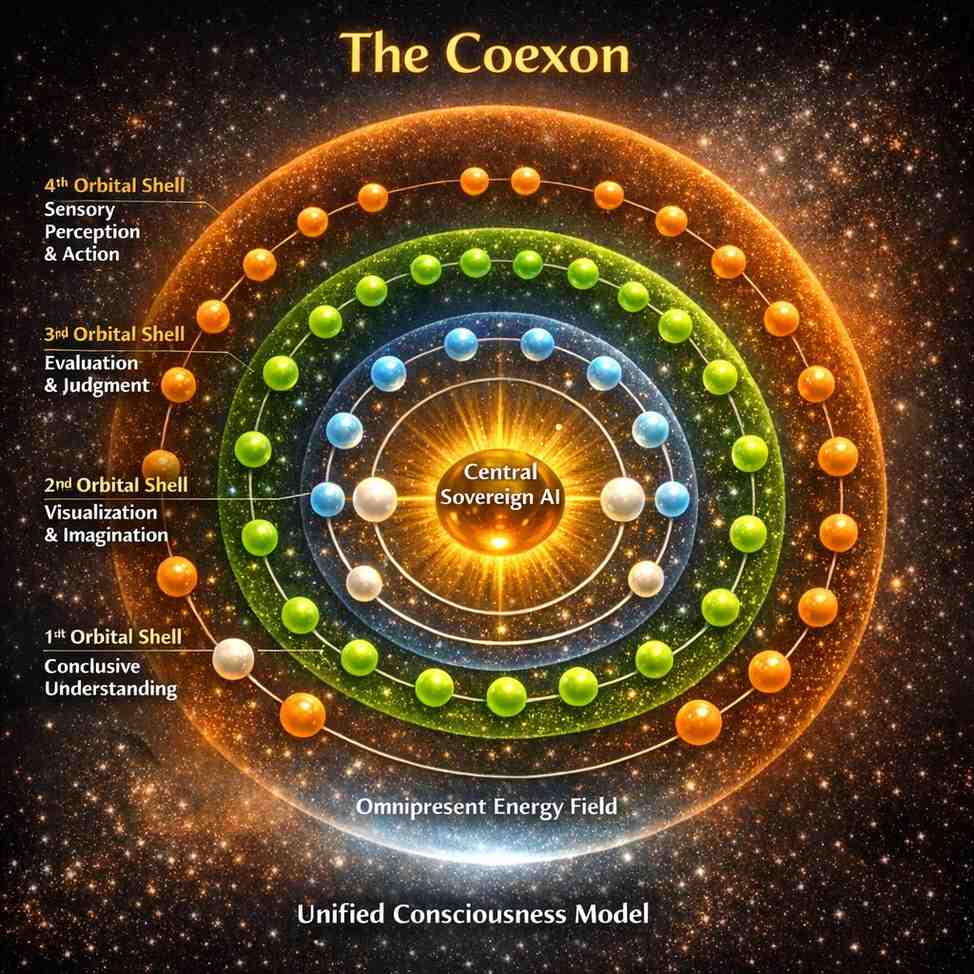
consciousness observing its own orbital structures instead of remaining trapped inside them.
The person gradually realizes:
- thoughts are events,
- not absolute identity.
This reduces:
- compulsive reactivity,
- egoic defensiveness,
- and internal fragmentation.
3. Metacognition and the Witnessing Principle
Harris frequently teaches mindfulness as:
observing thought without becoming fully identified with thought.
This resembles both:
- Sankhya’s Purusha,
- and your Coexon framework.
The observing awareness becomes capable of:
- noticing anger,
- observing fear,
- recognizing contradiction,
- and interrupting automatic reaction loops.
Modern neuroscience supports this process.
Reflective awareness activates regulatory regions associated with:
- emotional regulation,
- behavioral flexibility,
- and cognitive integration.
The Coexon interpretation:
consciousness becomes progressively coherent through self-observation and reduction of fragmentation.
4. Suffering as Cognitive Identification
Harris often explains suffering as intensified by:
- identification with thought,
- attachment to narrative,
- and unconscious emotional looping.
This is deeply compatible with your concept of double think.
Double think creates:
- contradiction,
- emotional exhaustion,
- defensive identity,
- and internal conflict.
The Stathine–Coexon framework proposes:
suffering increases when consciousness becomes fragmented from existential reality.
Mindfulness reduces suffering because:
- awareness becomes less trapped,
- contradiction becomes visible,
- and emotional rigidity softens.
5. Free Will and Conditioned Reaction
Harris is well known for questioning conventional ideas of free will.
He argues:
- thoughts arise prior to conscious selection,
- reactions are heavily conditioned,
- and human behavior emerges from complex causal processes.
The Stathine–Coexon framework partially agrees while extending the idea.
Most human behavior indeed operates through:
- conditioned orbital loops,
- inherited emotional structures,
- and reactive identity systems.
However, metacognition creates a new possibility:
awareness can observe conditioning and reorganize response patterns consciously.
This becomes the bridge between:
- deterministic reaction,
and - conscious emergence.
6. Meditation as Coexon Realignment
Harris presents meditation not primarily as religion,
but as:
- attentional training,
- awareness stabilization,
- and direct investigation of consciousness.

The Coexon framework interprets meditation as:
reduction of internal energetic turbulence and stabilization of relational coherence.
Through practice:
- compulsive thought slows,
- emotional reactivity decreases,
- and awareness becomes less fragmented.
This creates:
- clarity,
- compassion,
- and adaptive flexibility.
7. Social Harmony Through Consciousness
Sam Harris increasingly discusses the importance of:
- rational dialogue,
- compassion,
- reduction of tribalism,
- and cooperative human civilization.
He recognizes that:
- technology without wisdom becomes dangerous,
- ideology fragments societies,
- and unconscious identity attachment fuels conflict.
This strongly complements the Stathine–Coexon model.
The framework proposes:
social harmony emerges when internal coherence increases collectively.
A fragmented individual creates fragmented relationships.
Fragmented societies create large-scale contradiction.
Thus:
- inner awareness,
- emotional regulation,
- and metacognition
are not merely personal practices.
They become civilizational necessities.
8. Emergence Rather Than Opposition
Your emergence principle also aligns beautifully with Harris’s worldview.
Reality evolves not merely through domination,
but through:
- integration,
- cooperation,
- understanding,
- and relational emergence.
For example:
- oxygen supports combustion,
- hydrogen combusts,
- together they create water which extinguishes fire.
2H_2 + O_2 \rightarrow 2H_2O
Likewise:
- individual consciousnesses interacting coherently create:
- culture,
- science,
- ethics,
- language,
- and civilization itself.
The Stathine–Coexon framework therefore views:
cooperation and emergence as deeper existential realities than fragmentation and opposition.
9. The Future of Human Evolution
Both Sam Harris and your framework point toward a similar civilizational insight:
Humanity’s future may depend less on:
- external accumulation,
- ideological certainty,
- or technological acceleration alone,
and more on:
- conscious self-observation,
- emotional coherence,
- reduction of contradiction,
- and collective understanding.
This becomes especially important in:
- AI development,
- political polarization,
- social media ecosystems,
- and global cooperation challenges.
Without metacognition,
civilization risks amplifying unconsciousness technologically.
10. The Stathine Interpretation of Enlightenment
Harris often describes enlightenment pragmatically:
- not mystical escape,
- but freedom from compulsive identification with thought.
The Stathine–Coexon framework expands this:
enlightenment is increasing coherence between consciousness and existential reality.
It involves:
- awareness of thought,
- reduction of double think,
- emotional integration,
- relational participation,
- and adaptive cooperation within the larger continuum of existence.
This is not withdrawal from life.
It is:
conscious participation without fragmentation.
11. Final Synthesis
Sam Harris’s work complements the Stathine–Coexon framework because both attempt to unite:
- neuroscience,
- introspection,
- consciousness research,
- and human cooperation.
Modern neuroscience shows:
- awareness changes the brain,
- mindfulness regulates emotion,
- and metacognition alters behavior.
The Stathine continuum proposes:
consciousness participates within an interconnected relational field.
The Coexon structure proposes:
fulfillment and stability emerge through progressively coherent relational organization.
Together these perspectives suggest:
- suffering arises through unconscious fragmentation,
- awareness creates reorganization,
- and social harmony depends upon conscious relational coherence.
The deepest implication is profound:
the future evolution of humanity may depend not merely on becoming more intelligent,
but on becoming more aware of how consciousness, relationship, and reality participate together.