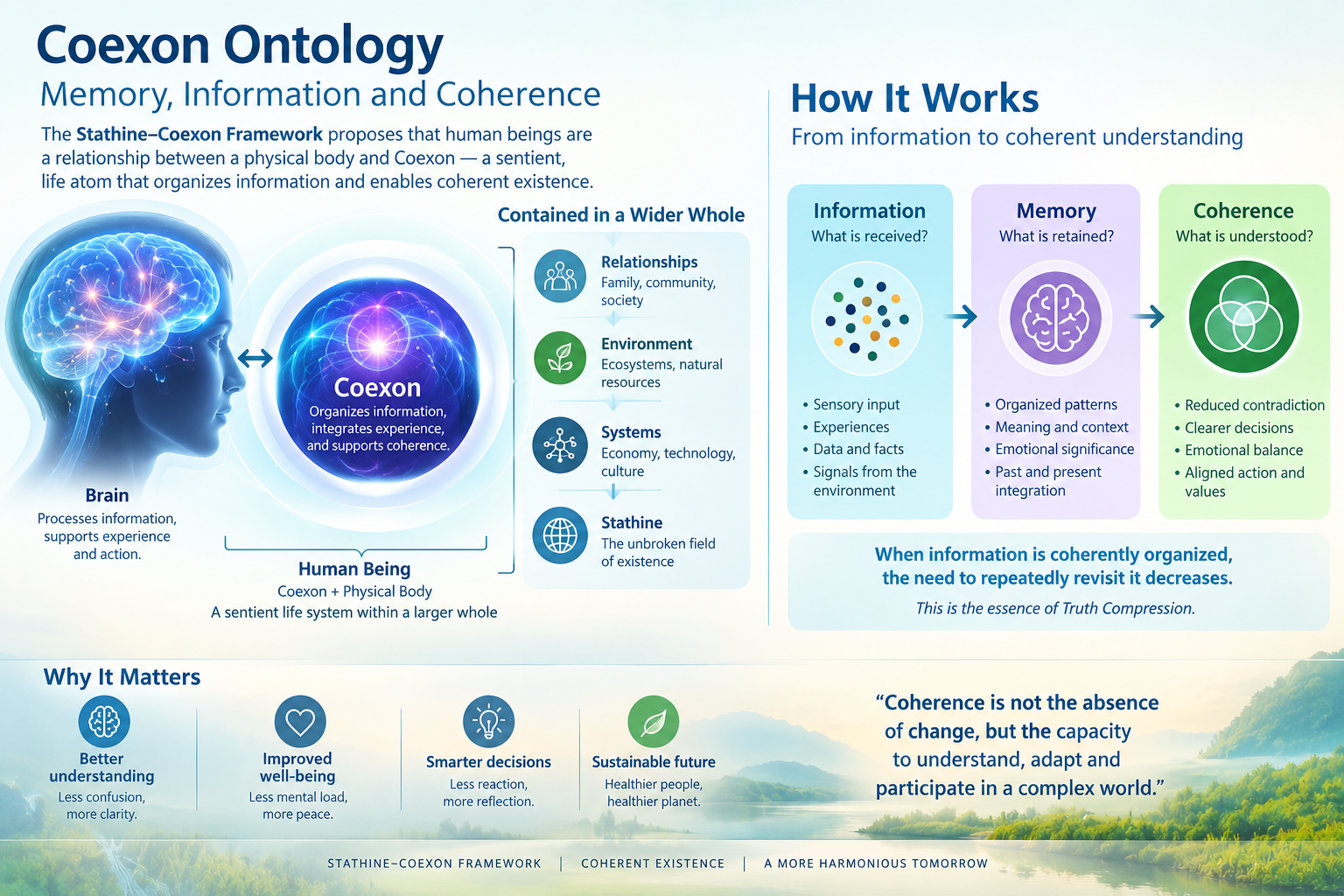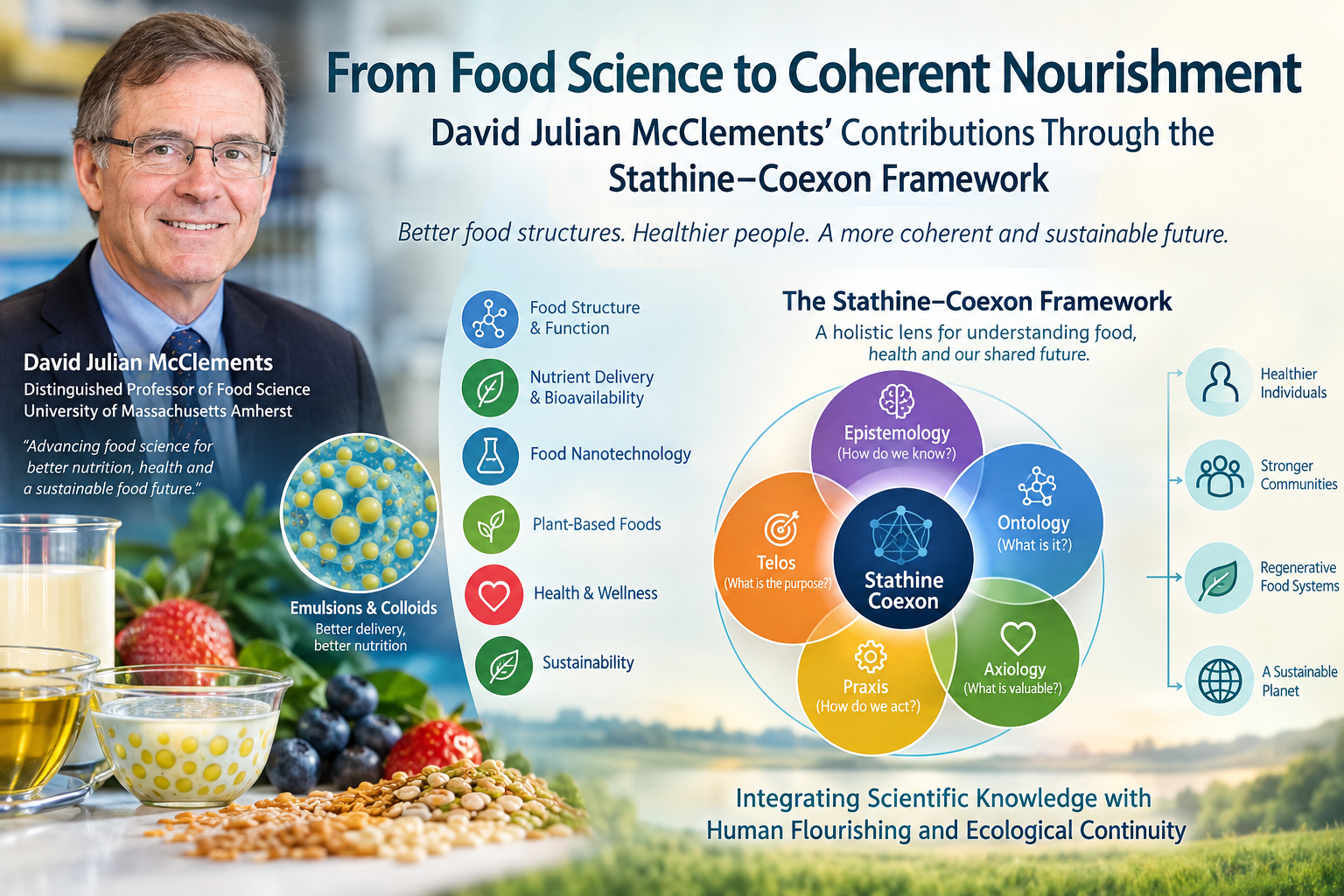

Science of Coexistence includes all sciences :)
Having studied the laws of existential reality in a holistic way I tried to look at various scientific principles in the contemprory world. This last piece of the puzzle completes all the questions that are left unanswered otherwise.
Humanity now can know the existential reality and be in harmony by understanding. Humane behaviour of neither exploiting or not being exploited can be practiced. Once this becomes the tradition then every new born will have no delusion and live in bliss always.
Every human being will be self regulated and create benevolence and heavenly enviornment on this beautiful planet of ours.
I. The Metaphysics of Scientific Knowledge: A Framework for Classification
The classification of knowledge structures — laws, principles, and generalizations — is not merely semantic; it reflects fundamental differences in epistemic certainty, scope of application, and the nature of the phenomena under investigation across scientific domains. A rigorous definition must precede the cataloging process, acknowledging the varied standards of proof and universality found when transitioning from the physical sciences to the social sciences.
A. The Law-Theory-Hypothesis Continuum: Boundaries and Interplay
Scientific knowledge is organized hierarchically, moving from highly specific observations to broad, unifying frameworks. Within this structure, scientific laws and scientific theories occupy distinct, non-overlapping roles. A law is fundamentally descriptive, predicting what will happen under specific, concise conditions, often expressed through a mathematical statement. Conversely, a scientific theory is an elaborate, comprehensive structure that proposes why phenomena occur, containing a large collection of verified statements that explain all aspects of a particular phenomenon.
For instance, Kepler’s Laws describe the kinematics of planetary motion, detailing how planets move. In contrast, Newton’s Theory of Universal Gravitation provided the dynamic explanation for why those motions occur. The crucial distinction is that a law will never mature into a theory; they are different logical constructs. A profound implication of this distinction is that when a foundational theory is superseded, the accuracy of the underlying descriptive law often remains intact, though its scope may be restricted. For example, Einstein’s Theory of General Relativity accurately describes gravity, space, and time universally , restricting the domain of Newtonian mechanics; yet, within the boundaries of everyday, low-speed, weak-gravity environments, Newton’s laws remain highly accurate.
The foundational difference between laws and theories on one hand, and facts and hypotheses on the other, rests on the degree of validation. Hypotheses and postulates are proposed early in the scientific process and require extensive validation. Scientific laws and theories, however, represent empirical conclusions reached after repeated observation and experimental testing, summarizing established regularities.
B. Defining the Scientific Law: Descriptive Statements and Predictive Conciseness
A scientific law is characterized by its conciseness and predictive power. It is defined as an empirical generalization — a statement of regularity expressed in a concise verbal or mathematical form. These laws summarize the results of repeated experiments or observations and are used to describe or predict a range of natural phenomena.
Laws are generally considered to be inherent descriptions of reality, reflecting causal relationships that are discovered through the scientific method, rather than being invented constructs. They represent biological or physical principles that appear to be without exception within their defined scope.
However, the precision of a scientific law does not equate to mathematical certainty. Scientific laws summarize data within a certain range of application and remain provisional. A critical feature of scientific knowledge is that, like any empirical conclusion, a law may be contradicted, restricted, or extended by future observations, preventing it from ever achieving the absolute certainty of a formally proven mathematical theorem. This acknowledgement of provisionality is essential to the philosophy of science.
C. Defining the Foundational Principle: Axiomatic Structures and Organizing Concepts
The term “principle” often applies to theoretical concepts that serve an axiomatic or structural role, organizing and guiding inquiry within a particular domain. A principle is a broad, theoretical concept deduced from particular facts, applicable to a defined group or class of phenomena.
These structures function as necessary operational guidelines or core organizational concepts that span multiple sub-disciplines. For instance, the Principle of Conservation of Energy, which states that energy cannot be created or destroyed but only converted between forms, is fundamental not only to physics and chemistry but also to the study of biology, informing the principles of matter/energy transfer and transformation in living systems. In the life sciences, principles like Homeostasis, Information Flow, and Structure/Function relationships act as crucial organizing concepts that define the very systems being studied.
D. Defining the Empirical Generalization: Statistical Regularity and Contextual Constraints
Empirical generalization is a necessary form of abstraction employed when dealing with complex, variable systems, particularly those involving living organisms or human behavior. A generalization formulates the common properties observed across specific instances as general concepts or claims.
Generalizations are critically dependent on the mechanisms of scientific method, particularly the collection and analysis of data through surveys and experiments. When applied to large populations, generalizations rely on statistical generalization: drawing conclusions about an entire population based on the careful analysis of a smaller, representative sample. This approach is primarily used for practical reasons, such as cost efficiency, speed, or to avoid interference with the studied phenomenon.
In disciplines like sociology, psychology, and social anthropology, generalizations must contend with extremely high variation stemming from individual experience, differences in subcultures, or measurement errors. For this reason, universal, exceptionless laws in the social sciences are rare and often considered trivial. Instead, conclusions frequently take a probabilistic form, such as stating that a pattern holds true in 80 percent of the observed cases. The persistent variation found in social science is vastly greater than that typically encountered in physical or biological sciences. This probabilistic nature mandates that these findings be classified as robust generalizations rather than universal laws.
II. Domain I: The Physical Sciences — Determinism and Conservation
The Physical Sciences — Physics, Chemistry, and Astronomy — are characterized by the discovery of deterministic laws often expressed through elegant, universal mathematical relationships. These domains exhibit the highest degree of certainty and predictive power among the empirical sciences, underpinned by foundational principles of invariance.
A. Fundamental Laws of Classical Mechanics and Thermodynamics
The structure of classical physics, which describes the behavior of macroscopic objects, is rooted in principles of conservation and dynamics established primarily by Newton and the developers of thermodynamics.
The Conservation of Energy, often stated as the First Law of Thermodynamics, is among the most universally respected principles in science. It stipulates that energy cannot be created or destroyed, but merely converted from one form to another.5 This principle applies across all scales, from subatomic reactions to large-scale biological systems.6 Complementary to this is the Law of Conservation of Mass, which holds that mass is conserved during chemical transformations.5 Although modern physics unifies these concepts into mass-energy conservation ($E=mc²$), the classical laws retain their validity within their traditional scope. The Second Law of Thermodynamics establishes that the entropy (disorder) of a closed system must always increase over time, defining the directionality of all natural processes.
In celestial mechanics, Kepler’s Laws of Planetary Motion provide a purely descriptive account of orbital mechanics, formulated by Johannes Kepler using precise observations by Tycho Brahe.11
- The Law of Orbits: Planets move in elliptical orbits with the Sun positioned at one focus. This corrected the long-held classical belief in purely circular orbits.
- The Law of Areas: A line connecting the planet to the Sun sweeps out equal areas during equal intervals of time.11 This is not merely an observation; it is a direct consequence of the Conservation of Angular Momentum. When a planet is closer to the sun, the radius vector is shorter, necessitating a faster orbital speed to sweep the equivalent area in the same time interval.
- The Law of Periods: The square of a planet’s orbital period ($P²$) is directly proportional to the cube of the semi-major axis of its orbit ($a³$).
Kepler’s laws were instrumental because they emphasized quantitative, mathematical relationships, forming the necessary empirical groundwork for Newton’s later gravitational theory.
B. Core Laws of Chemistry and State
Chemistry relies heavily on laws that quantify the relationships between mass, volume, and the state of matter, particularly for gases and compounds.
The Ideal Gas Law provides a fundamental mathematical relationship describing the state of an ideal gas through the equation $PV=nRT$, where pressure ($P$), volume ($V$), and temperature ($T$) determine the state.
This single law encapsulates several other specific gas generalizations:
- Boyle’s Law describes the inverse relationship between the volume of a confined gas and the pressure applied, assuming constant temperature.
- Charles’ Law relates volume to absolute temperature at constant pressure.
- Avogadro’s Law states that equal volumes of gases maintained at identical temperatures and pressures contain an equal number of particles (atoms, molecules, ions, etc.).
Stoichiometry is defined by several foundational laws:
- The Law of Definite Composition (or Definite Proportions): This states that a specific chemical compound is always composed of the same elements combined in a defined ratio by weight.
- The Law of Multiple Proportions (Dalton’s Law): This law addresses situations where two elements can combine to form more than one compound. It states that the ratios of the masses of the second element that combine with a fixed mass of the first element will be simple whole numbers.
Other fundamental laws include Faraday’s Laws of Electrolysis, which quantify the relationship between the amount of electric charge passed through a cell and the mass of elements liberated at the electrodes.5 The Periodic Law states that the properties of chemical elements are periodic functions of their atomic numbers, forming the structure of the periodic table.
C. Fundamental Principles and Equations of Modern Physics
The transition from classical to modern physics involves a dramatic conceptual shift, leading to foundational principles that are fundamental to nature. While classical physics described particles and waves as separate phenomena — e.g., a billiard ball versus a water wave — quantum physics synthesized these into a unified framework where all physical entities exhibit particle/wave duality.
Quantum/Classical Emergence is a key principle: Quantum mechanics is considered the fundamental description of nature and holds up against all experimental tests. However, objects outside the subatomic realm are accurately described by classical laws. This implies that the quantum description of large bodies must, at some point, reduce to Newtonian concepts — a phenomenon known as the emergence of classicality.13 Although standard quantum mechanics sometimes struggles to explain this transition fully, the prevailing understanding is that the classical domain is merely an effective, high-scale approximation of the deeper quantum reality.13 This conceptual understanding restricts the theoretical scope of classical laws, even as their descriptive accuracy remains high within their specific domain.
Key equations and principles defining the quantum realm include:
- The Schrödinger Equation: This is the central foundational equation of non-relativistic quantum mechanics, describing how the quantum state of a physical system changes over time. Its solutions (wave functions) allow for probabilistic prediction of observables.
- The Dirac Equation: Developed by Paul Dirac, this is a relativistic wave equation for spin-1/2 particles, most notably the electron. By successfully incorporating both quantum mechanics and special relativity, the Dirac equation predicted the existence of antimatter.
- The Pauli Exclusion Principle: This is a fundamental constraint in quantum systems, particularly concerning fermions (like electrons). It mandates that no two identical fermions can occupy the same quantum state simultaneously.16 This principle arises mathematically as a consequence of the required antisymmetry of the many-electron Schrödinger wave function.
The hierarchy of physical knowledge places the universal conservation laws and the principles of quantum mechanics at the top, defining the invariant constraints under which all other laws and generalizations operate.
Physical Laws by Scale and Scope
Scale/ScopeConceptNatureCore ImplicationMacroscopic/CelestialKepler’s LawsEmpirical Description, Deterministic
Define the kinematics of orbital motion
Macroscopic/TerrestrialFirst Law of ThermodynamicsFoundational Principle, Conservation
Dictates that energy is invariant, only changing form
Microscopic/AtomicPauli Exclusion PrincipleFundamental Constraint, Quantum
Prevents electron collapse, defining chemical structure and stability
FoundationalQuantum/Classical EmergencePrinciple of Scale
Classical laws are effective approximations of fundamental quantum theory
III. Domain II: The Life Sciences — Information, Organization, and Emergence
The Life Sciences (Biology, Physiology, Ecology) integrate physical and chemical laws with unique principles governing organized, information-processing, self-regulating systems. Laws in this domain tend to be deterministic only at the genetic or molecular level, giving way to probabilistic generalizations at the organismal and ecological scales.
A. Foundational Laws of Genetics
The structure of inheritance is one of the few areas in biology that produced highly deterministic, concise laws, formulated by Gregor Mendel. These laws describe the particulate nature of hereditary units (genes).
- Law of Segregation: During the formation of gametes (sex cells), the two alleles for each gene segregate from one another, ensuring that each gamete carries only one allele for each gene.
- Law of Independent Assortment: Genes responsible for different traits assort independently during gamete formation.
- Law of Dominance and Uniformity: States that in a heterozygote, some alleles are dominant and will mask the effect of recessive alleles, meaning an organism displaying the effect of the dominant allele needs only one copy.
Complementing these deterministic rules of inheritance is the Hardy-Weinberg Principle of Genetic Equilibrium. This is a foundational principle in population genetics, establishing the mathematical conditions under which a population’s genetic composition — its allele and genotype frequencies — will not evolve and will remain constant across generations.18 The key assumptions required for this equilibrium include: a large population size, random mating, no mutation, no migration, and no natural selection.
The significant function of the Hardy-Weinberg principle is that it provides a null model for evolutionary study.18 Because real-world populations virtually always violate these idealized assumptions, observed deviations from the Hardy-Weinberg equilibrium allow scientists to quantitatively measure the magnitude of evolutionary forces (selection, mutation, or genetic drift) acting on the population.18 The stability of allele frequencies is obtained rapidly, sometimes after just one generation of random mating, though sex-linked genes (such as those on the X chromosome in humans) require a few more generations to reach equilibrium.
B. Core Principles of Physiology and Organization
Physiology — the study of how living systems function — is organized around several core, high-level principles that represent the necessary conditions for life.6 These principles demonstrate how the inanimate laws of chemistry and physics are integrated into complex, regulated systems.
- Homeostasis: This is the primary principle of physiological regulation, describing the ability of an organism or cell to maintain a stable internal environment despite external changes.6 This principle is essential for survival and coordinates nearly all physiological control systems.
- Structure/Function Relationships: This principle posits a fundamental link between the physical organization of biological material (from molecules to organs) and the role it performs.6 Examples range from the shape of an enzyme active site determining its substrate specificity to the structure of the kidney dictating its filtration capability.
- Causal Mechanisms: Physiology operates under the guiding principle that all observable phenomena must have underlying, identifiable physical or chemical mechanisms.6 This ensures that biological explanations are grounded in empirical, reproducible processes.
- Information Flow: Life systems are defined by the transfer and processing of information, spanning genetic information (DNA to RNA to protein), neural communication, and chemical signaling (hormones).6 Understanding the pathways and fidelity of this flow is a core organizing concept in biology.
- Matter/Energy Transfer and Transformations: This core principle explicitly connects biological systems back to the physical universe, confirming that living organisms must obey the laws of conservation of mass and energy.6 Organisms acquire, transform, and transfer matter and heat flows, requiring the application of physical laws in a biological context.
C. Generalizations in Evolutionary Biology and Ecology
At the population and ecosystem level, deterministic laws are difficult to formulate due to environmental variability, resulting in robust empirical generalizations.
- Selection on Phenotype Generalization: This crucial evolutionary generalization states that natural selection acts directly upon the observable characteristics of an organism — the phenotype — rather than directly on the genetic code (genotype). Genetic change occurs as an indirect consequence of this phenotypic selection, as the phenotype is the “direct interface with the environment”.
- Ecological Generalizations: These include descriptive rules about species distribution and resource dynamics. Liebig’s Law of the Minimum generalizes that the growth or distribution of a plant (or organism) is determined not by the total resources available, but by the scarcest essential resource. Bergmann’s Rule is another generalization correlating latitude (or ambient temperature) with the body mass of organisms, generally observing that individuals in colder climates tend to be larger (allowing for better heat retention).
- The Ecosystem/Environment Principle: This principle establishes that the environment and the organisms within it form a dynamic, interconnected system.6 It guides the study of energy budgets, population dynamics, and nutrient cycling, recognizing the complex interplay between biotic and abiotic factors.
IV. Domain III: The Social Sciences — Behavioral Regularities and Institutional Constraints
The Social Sciences — Psychology, Sociology, Political Science, and Economics — face unique challenges in establishing universal laws due to the complexity of human motivation, agency, culture, and high measurement variability.9 Consequently, this domain relies heavily on probabilistic empirical generalizations and axiomatic principles that define rational behavior or institutional structure.
A. Psychophysical Laws and Cognitive Principles
A bridge between the physical and social sciences is found in psychophysics, which studies the relationship between physical stimuli and subjective perception. This field yielded some of the most consistent mathematical laws in the behavioral sciences: the Weber–Fechner Laws.21
- Weber’s Law: This law relates to the differential threshold, stating that the minimum increase in stimulus required to produce a perceptible increase in sensation is proportional to the magnitude of the pre-existing stimulus.21 This consistency applies across diverse senses, including weight, sound, and vision, though its applicability may break down at the extremes (e.g., very low light levels or sound intensities).
- Fechner’s Law: Building upon Weber’s findings and adding certain assumptions, Fechner deduced that the perceived intensity of a sensation increases as the logarithm of the physical increase in energy.21 This logarithmic scaling is observed in auditory systems and underlies processes like numerical cognition.
The mathematical consistency of the Weber-Fechner laws demonstrates that when human perception meets measurable physical input, high-precision regularity is possible. However, because the dependent variable is an internal, subjective measure (sensation), the laws possess a necessary empirical contingency not found in the measurement of, say, gas volume.
B. Generalizations in Sociology and Political Science
Universal laws in sociology and political science have proven elusive and often “trivial”.10 The primary products of these fields are sophisticated empirical generalizations drawn from the observation and statistical analysis of variable human behavior.
A particularly robust and influential generalization regarding institutional structure is the Iron Law of Oligarchy, formulated by Robert Michels. This political theory asserts that rule by a small, self-serving elite (oligarchy) is inevitable within any sufficiently large and complex democratic organization.22 Michels observed that organizational necessity dictates that power must be delegated to administrators, executives, and strategists. This leadership class, by controlling resources, information, and communication, inevitably gains dominion over the electorate, dominating the power structures and influencing outcomes “democratically” determined by the membership.22 The law posits that historical evolution consistently undermines measures adopted to prevent oligarchy.
The methodology inherent in social science requires researchers to seek rationales for generalizing from non-representative samples, relying heavily on statistical methods.9 Generalizations often reflect a high degree of probabilistic conformity, such as finding that a variable $B$ followed condition $A$ in 80 percent of cases.9 Crucially, the remaining unexplained variation, which is considerable compared to the physical sciences, must be accounted for by differences in individual experience, subcultures, or measurement error.9 The uncertainty regarding whether findings will hold under different cultural conditions further limits the universality of these generalizations.
In the empirical study of law, sociological and psychological analyses investigate institutional outcomes as generalizations.23 For instance, studies on California’s “three-strikes law” sought to determine if it achieved its intended deterrent effects.24 The empirical generalization found was that the law did deter minor crimes but failed to deter major ones, illustrating that social generalizations have specific boundary conditions and limited scopes of application.
C. Foundational Laws and Axioms of Economic Theory
Economic theory presents a distinctive epistemological structure, often utilizing principles derived deductively as logical necessities rather than inductively as empirical summaries.
Some fundamental economic laws are treated as Logical Axioms, meaning they are considered true a priori based on the concept of human action and, therefore, require no empirical verification; they cannot be falsified by observation.25 Societies that fare best are those that recognize and respect these fundamental laws. Examples include:
- Production Precedes Consumption: This foundational axiom states that goods or services must exist before they can be consumed, countering policies that attempt to stimulate production by artificially increasing consumption.
- Consumption is the Final Goal of Production: Production is merely the means; the ultimate objective of all economic activity is consumption.
- Money is Not Wealth: The true value of money lies in its purchasing power, not its nominal quantity.
- Productivity Determines the Wage Rate: In a free labor market, competition among firms drives the wage rate up until it matches the marginal productivity of the worker.25 While organized labor may affect the distribution of wages, unions cannot fundamentally alter the overall wage level determined by labor productivity.
In contrast to these axioms, Empirical/Generalized Laws in economics, such as the Law of Demand (inverse relationship between price and quantity demanded) and the Law of Diminishing Marginal Utility, function as high-probability generalizations derived from empirical observation of market behavior.
The treatment of core economic concepts as logical laws contrasts sharply with the inductive methodology of the physical sciences, where all laws are contingent on observation.3 If an economic law is true in itself, it cannot be experimentally contradicted, confirming its status as a formal principle analogous to mathematics rather than a descriptive scientific law.
The Varied Nature of Social Scientific Laws and Generalizations
Discipline Concept Type Example Nature of Certainty Psychology/PerceptionWeber-Fechner Law
Psychophysics
Mathematical generalization with specific empirical limitsSociology/PoliticsIron Law of Oligarchy
Institutional Constraint
Highly robust empirical generalization, descriptive of organizational dynamicsEconomics (Axiomatic)Production Precedes Consumption
Foundational Principle
Logically derived, non-empirical axiom (true in itself)Sociology (Empirical)Deterrent Effect of Law
Statistical Generalization
Probabilistic outcome observed in specific cultural contexts
V. Domain IV: Mathematics and Domain V: Computer Science — Formal Systems and Computational Limits
Mathematics serves as the ultimate benchmark for certainty in knowledge, dealing exclusively with deduction and internal logical consistency. Computer Science, an interdisciplinary field built on mathematics, applies these logical foundations to address the physical and theoretical limits of computation.
A. Foundational Principles of Mathematical Logic and Formal Systems
Mathematics constructs knowledge through the deductive method, moving from universally accepted Axioms (foundational, unproven statements) to complex, absolutely certain Theorems via rigorous logical proof. The certainty achieved within a formal mathematical system is absolute, distinguishing it fundamentally from empirical scientific laws, which are provisional.
A critical meta-mathematical principle that defines the boundaries of formal systems is Gödel’s Incompleteness Theorems.26 Proved by Kurt Gödel in 1931, these theorems demonstrate fundamental limitations on what can be proven within formal mathematics. Specifically, any sufficiently powerful, consistent formal system (one capable of expressing arithmetic) must contain true statements that are undecidable — they can neither be proven nor disproven within the system itself.26 This principle imposes absolute, inherent limits on the scope of any formal system, including the theoretical limits of computation, information processing, and artificial intelligence.
B. Core Laws in Probability and Statistics
Probability and statistics represent the mathematical tools essential for bridging formal logic with empirical observation, providing the formal structure that justifies the practice of generalization in the empirical sciences.
- Law of Large Numbers: This statistical law dictates that as the number of independent, identical trials increases, the average of the results obtained from those trials will converge toward the expected theoretical value. This principle is fundamental to data science and reliability.
- Central Limit Theorem: A pivotal theorem establishing that, regardless of the underlying distribution of a population, the distribution of sample means taken from that population will tend toward a normal (Gaussian) distribution, provided the sample size is sufficiently large.
- Benford’s Law: This is an intriguing empirical generalization that describes the non-uniform frequency distribution of the first digit in many naturally occurring data sets (e.g., financial data, population numbers, physical constants). The digit 1 appears as the leading digit approximately 30% of the time.27 While widely observed and useful for fraud detection, it is classified as a generalization derived from observed data patterns.
C. Principles and Constraints in Computational Theory
Theoretical computer science operates on mathematical principles that define the abstract capabilities and limitations of computation.26
- The Church-Turing Thesis: This foundational principle asserts that any function that can be computed by an algorithm can be computed by a Turing machine. It provides a formal definition of “computability” itself, establishing the theoretical limit of what any physical computing device can achieve.
- Computational Complexity Principles: These principles categorize computational problems based on the resources required to solve them (time complexity, space complexity). P vs. NP is the most famous unsolved problem concerning complexity, distinguishing problems solvable efficiently from those whose solutions are merely checkable efficiently.
- Information Theory Laws: Developed by Claude Shannon, these mathematical laws quantify information flow, defining limits on data compression, storage, and reliable communication through noisy channels.
D. Empirically Observed Generalizations in Computer Architecture
When computational theory is applied to real-world hardware, specific laws and generalizations emerge that define system performance.
- Amdahl’s Law (Performance Constraint): This is a mathematically derived formula defining the theoretical maximum speedup achievable by parallelizing a task.28 Amdahl’s Law demonstrates the concept of diminishing returns: the overall performance improvement gained by optimizing a single component is fundamentally limited by the fraction of time that the optimized component is actually used. Crucially, the maximum possible speedup is mathematically constrained by the portion of the task that must remain serial (unparallelizable). For example, if 95% of a task is parallelized, the theoretical maximum speedup is 20 times, regardless of the number of processors added.
- Moore’s Law (Technological Generalization): This well-known observation holds that the number of transistors on an integrated circuit doubles approximately every two years. Although termed a “law,” it is an empirically derived trend describing the rapid geometric improvement in semiconductor technology.29
The relationship between Amdahl’s Law and Moore’s Law dictates the trajectory of modern computing performance. Moore’s Law provides the geometric increase in parallel resources, but Amdahl’s Law imposes a theoretical upper bound on how effectively those resources can be utilized.
This constraint becomes particularly significant in Human-Computer Interaction (HCI) systems. While computational components improve geometrically (Moore’s Law), the cognitive capabilities of the human user — such as reaction time and short-term memory capacity — are physiologically fixed and have not improved over centuries.29 In a human-computer system, the fixed, sequential processing capabilities of the human component become the irreducible, unparallelizable fraction, thereby acting as the dominant constraint on overall system speed and success according to Amdahl’s Law.29 This realization emphasizes the need for interaction design that accommodates fixed human channels rather than relying solely on continually improving hardware.
Computational Constraints and Generalizations
Concept Nature of Constraint Domain Implication
Amdahl’s LawComputational/Architectural Constraint Parallel Computing
Limits maximum speedup by the serial fraction of the task 28
Moore’s LawEmpirical/Technological GeneralizationHardware DevelopmentDefines the observed rate of transistor density growth over timeGödel’s Incompleteness TheoremsLogical/Mathematical PrincipleFormal Systems
Imposes absolute limits on provable truth within complex systems 26
Human Performance ConstraintsPhysiological/HCI GeneralizationHuman-Computer Systems
Fixed capacity acts as the serial bottleneck, limiting practical system speedup
VI. Synthesis and Conclusions: The Hierarchy of Scientific Certainty
The comprehensive categorization of laws, principles, and generalizations across five domains reveals a clear hierarchy of scientific certainty and an essential spectrum of methodologies driven by the complexity and variability of the subject matter.
A. Comparative Analysis of Law Applicability Across Domains
The analysis confirms a predictable gradient of epistemic certainty across scientific disciplines. Absolute certainty is exclusive to Mathematics, where theorems are deductively proven from axioms. Next are the Physical Sciences, characterized by universal, deterministic laws (e.g., Conservation Laws, Kepler’s Laws) that provide highly accurate predictions, but whose certainty remains contingent on empirical observation and falsifiability.3
In the Life Sciences, deterministic laws are largely confined to the molecular and genetic level (Mendel’s Laws). At higher levels of organization, the focus shifts to foundational Principles (Homeostasis, Structure/Function) that govern emergent properties of complex systems and are constrained by universal physical laws (Conservation of Mass/Energy).5
Finally, the Social Sciences deal with such high intrinsic variation and complexity that “laws” give way to Probabilistic Generalizations (e.g., sociological trends, deterrent effects).9 These generalizations typically hold for a high percentage of cases but contain residual variation attributable to human agency or unmeasured variables.9
B. Mapping the Relationship between Formal Axioms and Empirical Laws
A key finding is the distinct philosophical approach to foundational principles across domains. In physics, laws are contingent empirical discoveries.3 Conversely, in certain schools of economic thought, core concepts are treated as Logical Axioms, propositions deemed true in themselves (e.g., Production Precedes Consumption).25 These economic axioms function as formal, non-empirical constraints analogous to mathematical axioms, illustrating methodological pluralism in which some disciplines derive certainty through deduction while others rely entirely on induction.
Furthermore, Mathematical Principles (such as the Law of Large Numbers and the Central Limit Theorem) provide the formal, logical justification for the use of statistical generalization across all empirical sciences.8 Thus, mathematics furnishes the necessary tools for measuring and quantifying certainty, even when the observed phenomena (such as human behavior or ecological systems) are inherently probabilistic and complex.
C. Recommendations for Future Research and Classification
The inherent complexity in classifying scientific statements suggests a need for stricter terminological discipline.
- Standardized Terminology: Scientific discourse should standardize classification based on epistemic status (necessity, universality, and falsifiability) rather than historical nomenclature. Concepts like “Moore’s Law,” which describe historical trends, should be formally recognized as Empirical Generalizations, while a concept like the Iron Law of Oligarchy, which describes structural inevitability, should be understood as a highly robust Organizational Constraint Principle, differentiating it from the universal predictability of physical laws.
- Focus on Invariant Constraints: Interdisciplinary research should focus intensively on universal, domain-spanning constraints that define absolute limits. The principles of Conservation of Energy and Mass dictate physical possibility 5; Gödel’s Incompleteness Theorems define the boundaries of formal proof 26; and Amdahl’s Law sets invariant limits on performance speedup for parallel systems.28 Recognizing how these fundamental constraints interact — for example, how the fixed serial capacity of human physiology imposes an Amdahl-style constraint on the utility of exponentially improving hardware 29 — is crucial for understanding the ultimate performance limits of complex engineered systems. These invariant constraints represent the most certain and absolute forms of knowledge outside of purely deductive mathematics.
Science of Existence as Coexistence
The holistic study of all the sciences put together has created a complete study for humanity to not just learn academic jargon but practice it in everyday living and create a tradition that will ensure that there is no confusion and only resolved enligthenment in every human being.
I am working towards that with all of you if you have come so far 🙂 Looking forward to work with you to create utopia on this planet as a reality.