The Evolving Circle: Tracing the Historical Journey of “Us”
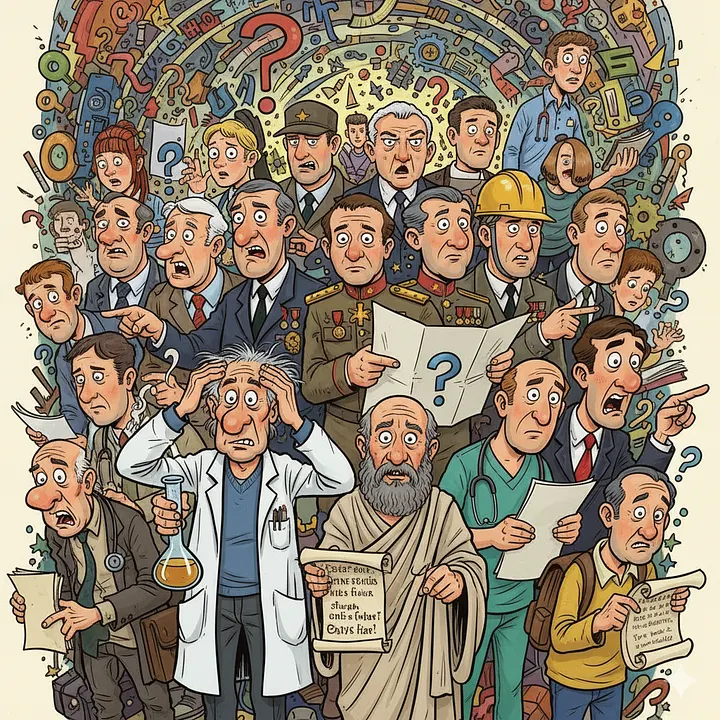
The human story is, at its heart, a narrative of ever-expanding circles. From our earliest origins, the concept of “us” has been the cornerstone of survival, cooperation, and identity. Yet, this circle hasn’t been static; it’s constantly been redrawn, sometimes by necessity, and increasingly, by a growing awareness of our shared humanity. Understanding this historical evolution isn’t merely an academic exercise; it’s essential for grasping why our contemporary definition of “us” must finally embrace the entirety of the human family and, indeed, the planet itself.
The Primal Circle: Tribe and Kin (Prehistory to Early Civilizations)
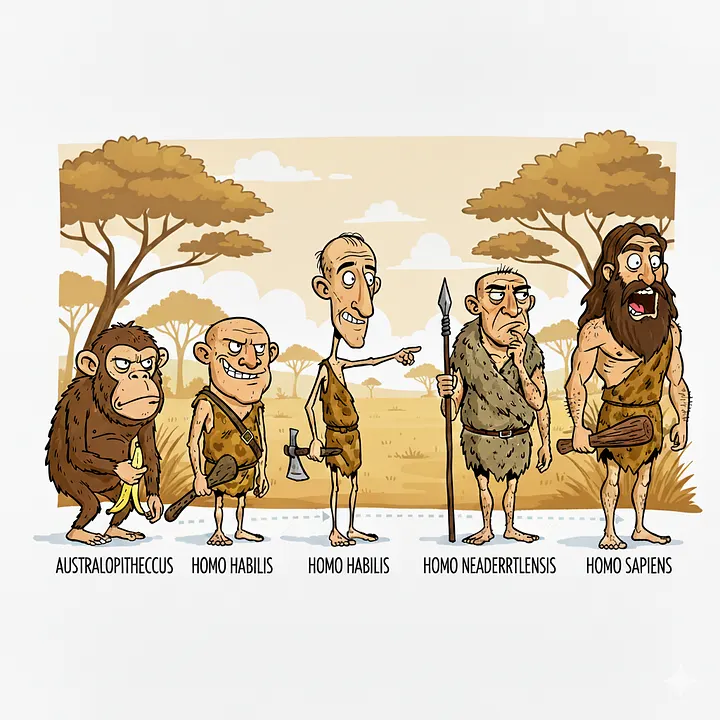
In the dawn of humanity, the “us” was starkly defined by immediate proximity and shared lineage. The primal circle was the tribe, the clan, the extended family. Survival depended on absolute loyalty to this small group. Resources were scarce, and threats were omnipresent — from predators to unfamiliar human groups — and a strong, cohesive “us” was the only bulwark against a hostile world.
Example 1: The Hunter-Gatherer Band Imagine a small band of hunter-gatherers on the plains of ancient Africa. Their “us” would be the fifteen or thirty individuals with whom they shared food, defended against dangers, and navigated the seasonal migrations. Curiosity, a fundamental human trait, would certainly have drawn them to explore beyond their immediate foraging grounds, leading to encounters with other human groups. However, with limited shared knowledge and the absence of established communication, these initial encounters often fostered a sense of difference. Language barriers, unfamiliar customs, or distinct appearances meant that while curiosity might have initiated contact, the lack of deeper understanding often kept the circle of “us” narrowly defined, with those outside remaining distinct. The depth of connection within this small circle was profound, based on direct personal relationships and mutual dependence for survival.
As agriculture emerged and settlements became permanent, this circle expanded slightly to encompass the village or early city-state. Curiosity led to trade and interaction, yet the underlying principle often remained: “us” was those within our walls, our fields, our shared deities, and our immediate defensive perimeter. Interactions with distant communities, while spurred by curiosity for new goods or knowledge, frequently encountered the limitations of prejudices based on skin color, tradition, or perceived cultural inferiority, which often kept the circle of “us” internally focused.
It’s crucial to acknowledge here the sophisticated understanding of ecosystems often developed by these early societies. Many Indigenous communities across the globe cultivated intricate systems of land management, sustainable harvesting, and ecological stewardship, demonstrating an advanced, symbiotic relationship with their environment. Their “us” often encompassed the land, water, and non-human species as integral parts of their survival and identity, not merely as resources to be exploited.
The Rise of Civilizations: City-States and Early Empires (Ancient Civilizations)
With the advent of advanced agricultural techniques and organized labor, larger and more complex societal structures began to emerge, forming the earliest civilizations. The concept of “us” expanded beyond the immediate village to encompass entire cities and, eventually, broader regional entities.
Example 2: The Indus Valley Civilization Consider the Indus Valley Civilization (circa 2500–1900 BCE), one of the world’s earliest major urban civilizations. Its cities, like Mohenjo-Daro and Harappa, showcased remarkable urban planning, advanced drainage systems, and standardized weights and measures, suggesting a highly organized and cohesive society. The “us” here extended across vast territories linked by trade networks, shared iconography, and sophisticated civic administration. What’s particularly striking about the Indus Valley Civilization is the apparent lack of evidence for widespread warfare or monumental displays of individual rulers, suggesting a more communal and perhaps less hierarchical “us” than later empires. Their focus seemed to be on civic order, trade, and a harmonious relationship with their environment, including elaborate water management systems to adapt to the seasonal monsoons. This early civilization represents an impressive scale of human cooperation that wasn’t primarily driven by military conquest.
Following this, or developing concurrently in other regions, vast empires began to emerge across the globe, often forcibly incorporating diverse peoples into a larger, often hierarchical, “us” defined by a powerful central authority and shared laws or tributes. These empires, whether the Persian, Mauryan, Han Chinese, or Roman, often achieved remarkable feats of engineering, infrastructure, and administrative organization. They facilitated trade over vast distances and sometimes fostered periods of relative peace within their expansive borders. However, this expansion was almost universally achieved through conquest and the imposition of a dominant cultural and political system. The integration of diverse peoples into the imperial “us” was rarely an act of benevolent inclusion; it was often a pragmatic strategy to secure loyalty, taxes, and resources.
Example 3: Imperial Environmental Footprint Consider the patterns observed across many of these grand empires. While they brought innovation and expanded networks, their large-scale resource demands and approaches to land management often led to significant ecological changes. For instance, the Roman Empire, as one notable example, with its extensive agricultural practices, intensive mining, and urban development, contributed to widespread deforestation, soil erosion, and localized resource depletion across its vast territories. Similarly, historical records from ancient China show periods of severe deforestation linked to the expansion of agriculture and industry under various dynasties. The construction of massive cities, irrigation systems, and vast armies required immense resources, often extracted without long-term ecological consideration. The philosophy driving many of these imperial projects was one of human dominance over nature, viewing the land primarily as a source of wealth and power, a stark contrast to the regenerative practices often found in Indigenous societies. Despite incorporating diverse populations, the “us” of these empires remained hierarchical, with the ruling elite and their dominant culture at the apex, often overlooking or devaluing the sustainable wisdom of subjugated communities.
The collapse was imminent since it was not inclusive or e xpanding the us. The demise of empires often led to fragmentation, only for new forms of collective identity to emerge. The medieval period saw the “us” defined by feudal loyalties, religious affiliation (e.g., Christendom versus the Islamic world), and the nascent stirrings of what would become the nation-state.
The Peace of Westphalia in 1648, often cited as the birth of the modern nation-state system, solidified the idea of sovereign territories and populations bound by a common government. The “us” became synonymous with the “nation” — a shared language, culture, history, and often, a common external threat that reinforced internal cohesion. Nationalism, a powerful force, harnessed this sense of belonging, driving both progress and unprecedented conflict.
The Globalizing “Us”: Interdependence and the Shrinking World (Industrial Revolution to 20th Century)
The Industrial Revolution, with its attendant advancements in transportation and communication, began an inexorable process of shrinking the world. Goods, ideas, and people could travel further and faster than ever before. This era laid the groundwork for a truly global “us,” even if the concept was still largely theoretical and often overshadowed by nationalistic rivalries and colonial ambitions.
Example 4: Colonialism, Ecological Damage, and Indigenous Wisdom Ironically, the very forces that highlighted global interconnectedness — trade routes, resource demands, and technological advancements — for lack of complete understanding could not expand the “us mentality on a grander scale. Colonialism, driven by curiosity for new lands and resources, tragically led to the exploitation of vast regions and populations. European colonial powers, operating under a worldview that prioritized extraction and profit, often perceived newly “discovered” lands as wild, untamed, and ripe for exploitation. This perspective starkly contrasted with the reality of many Indigenous peoples who had long established sophisticated systems of sustainable land management, biodiversity preservation, and a deep, reciprocal relationship with the natural world.
For instance, many Indigenous communities practiced forms of agroforestry, controlled burns for ecological regeneration, intricate water management, and rotational hunting/fishing that ensured long-term abundance. Their traditions often held reverence for the earth and its resources, understanding their interconnectedness. However, European colonists, deluded by a belief in their own technological superiority and a desire for immediate gain, often dismissed or actively suppressed these advanced Indigenous ecological practices. They introduced monoculture farming, widespread deforestation, unsustainable mining, and invasive species, fundamentally disrupting delicate ecosystems. The “us” of the colonizer was narrowly defined by their economic interests, completely disregarding the holistic “us” that encompassed the indigenous populations and the health of the land they had stewarded for millennia.
The two World Wars, however, served as a brutal, undeniable lesson in global entanglement. What started as conflicts between European powers rapidly engulfed the entire planet. The scale of destruction, the interconnectedness of economies that collapsed, and the shared threat of nuclear annihilation forced a recognition that the actions of one nation could have catastrophic consequences for all. This grim reality began to chip away at the incomplete “us “ mindset, showing that the “us” was no longer just the nation; it was, in a very real sense, humanity itself facing shared existential threats. The formation of the United Nations post-WWII was a direct, albeit imperfect, attempt to codify this nascent global “us,” moving towards a recognition of shared human dignity.
The Digital Age and the Universal “Us”: The Internet and Environmental Awareness (Late 20th Century to Present)
The late 20th and early 21st centuries have witnessed an unprecedented acceleration in the expansion of “us,” primarily driven by two forces: the internet and a heightened awareness of planetary limits.
The internet has shattered geographical barriers, allowing for instant communication and the free flow of information across borders. It has revealed the astonishing diversity of human experience while simultaneously highlighting our common aspirations, struggles, and emotions.
Example 5: Global Social Movements and Environmental Activism Consider the rise of global social movements. A human rights abuse in one country can be instantly documented, shared, and protested by millions around the world. The internet allows for direct engagement and empathy with individuals regardless of their location, transcending the limitations of past biases. The “us” expands to include those suffering, regardless of their nationality or background. Similarly, the climate crisis provides perhaps the most compelling evidence of a universal “us.” A flood in Bangladesh, a wildfire in Canada, a drought in the Sahel — these aren’t isolated incidents but interconnected symptoms of a global problem that affects everyone, everywhere. The melting ice caps don’t discriminate by nationality; rising sea levels threaten coastal communities worldwide. This undeniable shared vulnerability forces us to confront a planetary “us” where the well-being of the entire biosphere is intrinsically linked to human survival.
Example 6: Global Supply Chains and Pandemics The COVID-19 pandemic offered a stark and immediate lesson in global interconnectedness. A virus originating in one city rapidly spread across the globe, bringing economies to a standstill, overwhelming healthcare systems, and impacting billions of lives. The “us” became everyone susceptible to the virus, highlighting the desperate need for global cooperation in vaccine development, distribution, and public health measures. Curiosity about the virus and its spread, shared globally, led to unprecedented scientific collaboration. Yet, even in this crisis, pre-existing divisions, economic disparities, and nationalistic tendencies sometimes hindered a truly unified response, illustrating that while the knowledge of our interconnectedness is clear, overcoming deeply ingrained habits of division remains a challenge. Similarly, our increasingly complex global supply chains mean that a factory shutdown in one country can lead to product shortages and price hikes across the world, demonstrating how our economic “us” is profoundly intertwined.
The Imperative of a Holistic “Us”
From the confines of the primal tribe to the sprawling digital networks of today, the circle of “us” has continuously widened. Curiosity has always driven humans to explore beyond their known boundaries, leading to encounters with diverse peoples. However, our limited knowledge, often intertwined with prejudices based on skin color, tradition, or superficial differences, has historically kept the “us” divisive rather than truly inclusive. This was especially evident in the damaging colonial worldview that disregarded the advanced, sustainable practices of many Indigenous peoples in favor of extractive, ecologically destructive approaches.
The challenge of our time is to consciously and deliberately embrace the most expansive definition of “us” possible — one that encompasses all humanity, all living beings, and the very planet that sustains us. This isn’t a romantic ideal but a pragmatic necessity. When we recognize that the enrichment of all — from the health of our oceans to the prosperity of every child — directly contributes to our own long-term well-being, our actions shift. The “us” must become synonymous with the entirety of existence, because in this deeply entangled reality, genuine harm to any part of the system ultimately diminishes the whole. The simplicity of this truth lies in its undeniable logic, while its depth resides in the profound shift it demands in our individual and collective consciousness. The historical journey has prepared us; the present moment demands that we finally complete the circle.