How Stathine and Coexon deepen the science of human cooperation
1. What Tomasello Established Clearly
Tomasello’s research shows:
Humans are different from other species because we can:
- Share goals
- Share attention
- Share intentions
The Core Idea
Humans don’t just act individually — we act together
This leads to:
- Language
- Culture
- Institutions
- Morality
2. The Tension He Leaves Open
Even though humans are built for cooperation:
- We still compete destructively
- We break trust
- We fragment into groups
👉 The puzzle:
If cooperation is natural, why is fragmentation so common?
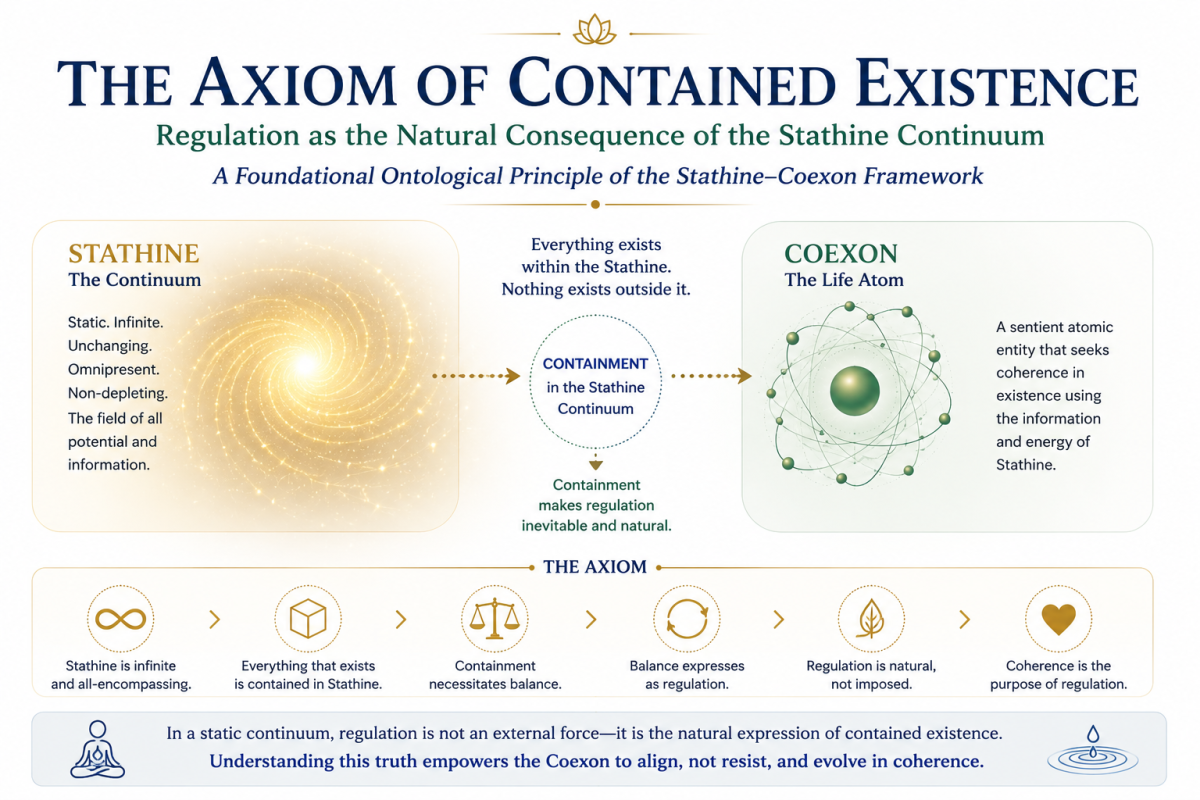
3. Stathine: Explaining the Ground of Shared Reality
Tomasello shows that humans:
- Perceive shared worlds
Through Stathine
We go one level deeper:
The world is not just shared socially — it is continuous at its foundation
What This Adds
- Shared intentionality is not just a cognitive skill
- It reflects a deeper non-fragmented reality
👉 Insight:
We can share reality because reality itself is not fundamentally divided
4. Coexon: The Missing Mechanism
Tomasello explains:
- How cooperation emerges
But not fully:
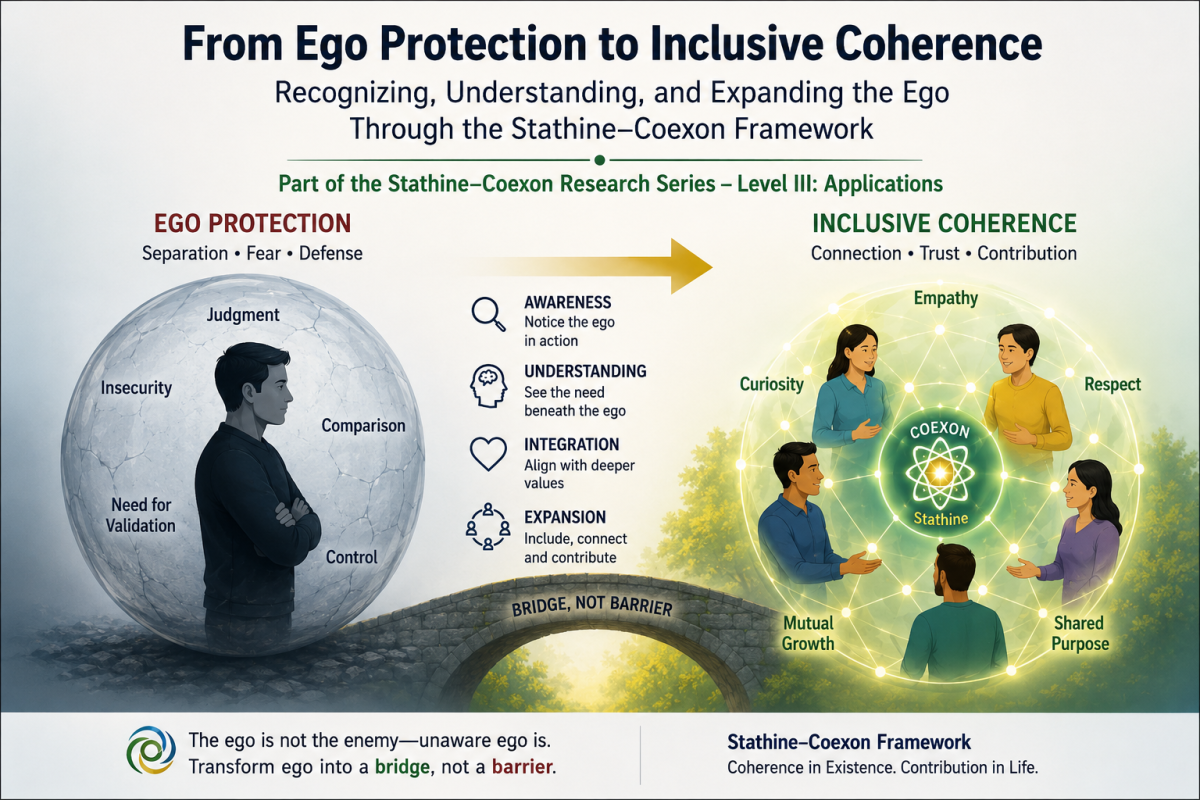
- Why it breaks down internally
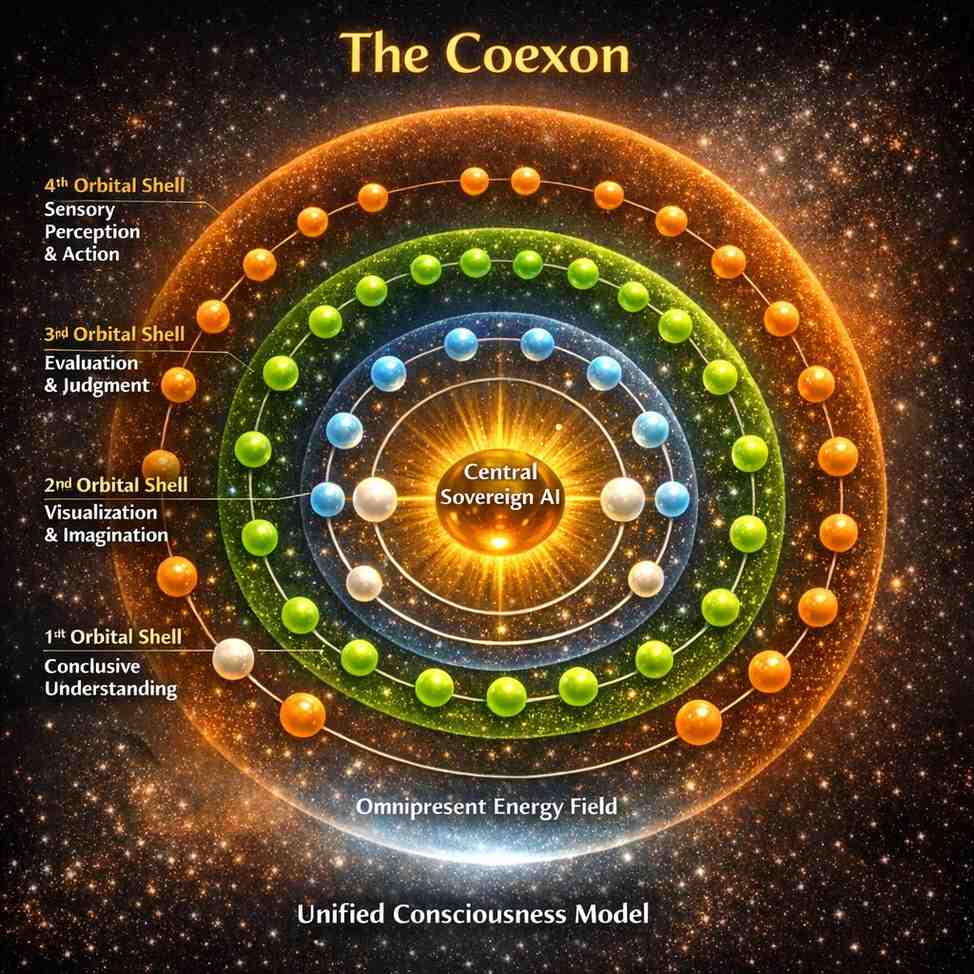
Coexon fills this gap
Coexon is:
The ability to detect when we are out of alignment with shared reality
Everyday Example
- A team agrees on a goal
- Individuals act in self-interest
- The system breaks
👉 Coexon detects:
- “We said we are aligned — but we are not acting that way”
5. Shared Intentionality vs Internal Fragmentation
Tomasello shows:
- Humans can form shared goals
But internally:
- Individuals remain conflicted
👉 Coexon introduces:
Internal alignment as a prerequisite for sustained cooperation
6. The Evolutionary Advantage Revisited
Tomasello argues:
- Cooperation gave humans an evolutionary edge
Through This Framework
We extend this:
- Cooperation works because:
- It aligns with continuity (Stathine)
- It reduces internal contradiction (Coexon)
👉 Fragmentation becomes:
- Not just socially inefficient
- But experientially unstable
7. Norms, Morality, and Coherence
Tomasello shows:
- Humans create norms to regulate behavior
The Limitation
Norms often become:
- External rules
- Enforced behavior
Through Coexon
- Morality becomes:
- Internally regulated
- Based on coherence
👉 Shift:
From:
- “Follow the rule”
To:
- “Act in alignment with shared reality”
8. Institutions and Their Failure Modes
Tomasello explains:
- Institutions arise from shared intentionality
Reality today:
- Institutions drift
- Trust declines
- Systems become extractive
Through Stathine + Coexon
- Stathine → reminds:
- systems are interconnected
- Coexon → reveals:
- where institutions contradict their purpose
👉 Result:
Institutions can self-correct — not just be externally reformed
9. Language and Understanding
Tomasello highlights:
- Language enables shared meaning
But language also:
- Creates misunderstanding
- Enables manipulation
Through Coexon
- People detect:
- mismatch between words and intent
👉 Result:
Communication becomes more authentic and aligned
10. The Completion
Tomasello gives us:
- The capacity for shared intentionality
Stathine gives:
- The ground of continuity that makes sharing possible
Coexon gives:
- The mechanism to sustain alignment
11. The Core Insight
Tomasello shows:
“Humans can think together.”
Stathine reveals:
“Reality is already continuous.”
Coexon enables:
“We can notice when we stop living that continuity — and realign.”
12. Why This Makes It Easier
This make things easy and fully explained.
Without This Framework
People must:
- Understand cooperation intellectually
- Follow norms externally
With This Framework
People can:
- Feel misalignment directly
- Adjust naturally
👉 It becomes:
- Less about learning
- More about noticing
Closing Reflection
We learned to think together,
and built worlds out of shared intention.
Yet somewhere,
we began to act alone again.
Tomasello showed us
that cooperation is our nature.
Stathine reveals
that separation was never fundamental.
Coexon allows us to see
where we act as if it is.
And then,
shared intention is no longer an effort —
it becomes the natural way
we participate in what already connects us.