Brain and its limits and The “I”
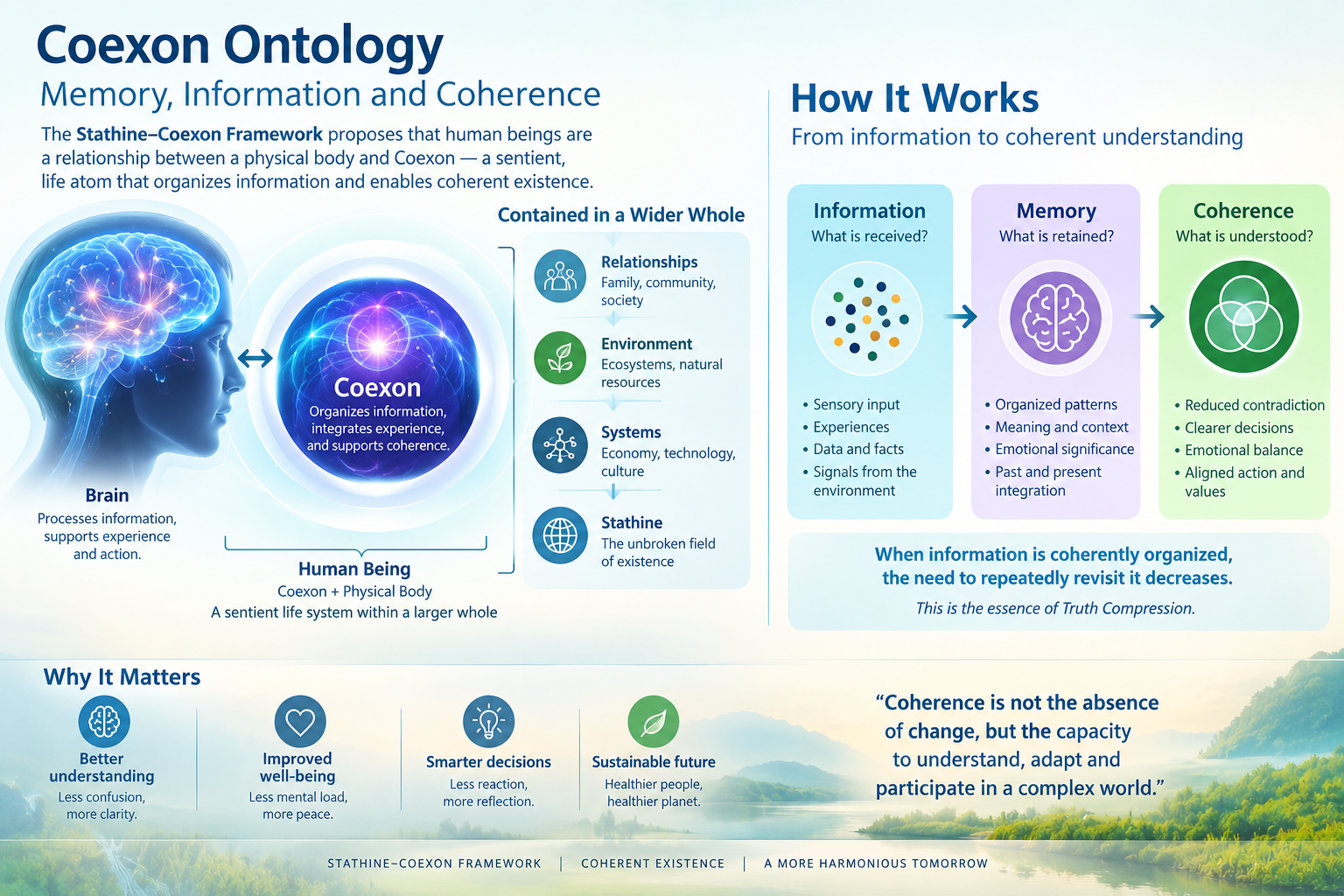
The intricate symphony of human experience, from the vibrant hues of a sunset to the melancholic strains of a distant melody, often seems inextricably linked to our physical form. We touch, we see, we hear, we taste, we smell — and these sensations, we assume, are the very fabric of our conscious existence. Yet, what if this assumption is merely a superficial reading of a profound truth? What if the human body and its marvelously complex brain are not the originators of these sensations, but rather sophisticated input devices, mere conduits for a deeper, non-physical entity — a “life atom” or soul — that alone possesses the capacity to truly enjoy and imbue these sensations with meaning? This essay will explore the provocative notion that our physical selves are but instruments, serving a profound, unseen experiencer, and that the richness of our subjective reality stems from this very distinction.
The Body: A World of Receptors and Raw Data
At its fundamental level, the human body is an elaborate collection of highly specialized sensory receptors, designed to interact with and gather information from the external world. Our eyes, for instance, are exquisitely engineered organs that capture photons of light, converting them into electrical signals. The retina, a complex neural tissue, houses photoreceptor cells — rods and cones — that respond to different wavelengths and intensities of light. These responses are then transduced into electrochemical impulses that travel along the optic nerve. Similarly, our ears meticulously capture sound waves, transforming their vibrations into mechanical energy within the inner ear, which then stimulates hair cells, generating neural signals. The skin, our largest organ, is a vast network of mechanoreceptors, thermoreceptors, and nociceptors, each tuned to detect pressure, temperature, and pain, respectively. Our nose and tongue possess chemoreceptors, which bind with specific molecules in the air or food, initiating chemical reactions that translate into olfactory and gustatory signals.
Crucially, these processes are, in essence, purely physical and mechanistic. They involve the interaction of matter and energy, the conversion of one form of signal into another. When light hits our eye, it’s a physical event; when pressure is applied to our skin, it’s a mechanical force. The data gathered by these sensory organs is raw, uninterpreted information — electrical impulses, chemical gradients, mechanical vibrations. If the body were the sole experiencer, our reality would be a bewildering storm of undifferentiated input, a meaningless stream of data. The body, in this light, is a highly refined scanner, diligently collecting information, but devoid of the capacity to understand, much less enjoy, what it perceives. It is the sophisticated apparatus through which the external world is rendered into a format comprehensible to something beyond its own physical confines.
The Brain: A Masterful Processor, Not the Seat of Sensation
Following the initial transduction by the sensory organs, these raw electrical signals embark on a complex journey through the nervous system, eventually reaching the brain. The brain, often hailed as the seat of consciousness, is undoubtedly a marvel of biological engineering. It processes these incoming signals with astonishing speed and efficiency, interpreting, organizing, and integrating them into a coherent internal representation of reality. The visual cortex, for example, reconstructs the electrical impulses from the optic nerve into the images we “see.” The auditory cortex transforms sound waves into recognizable melodies or speech. The somatosensory cortex processes touch and temperature.
Furthermore, the brain plays a critical role in memory, associating new sensations with past experiences and creating a context for understanding. It filters out extraneous noise, focuses attention, and predicts outcomes based on sensory input. These functions — pattern recognition, data filtering, contextualization, and even the generation of motor responses — are incredibly sophisticated computational processes. The brain is a powerful supercomputer, capable of complex algorithms, vast data storage, and intricate predictive modeling.
However, a fundamental distinction arises here: processing information is not the same as experiencing it. The brain can register the wavelength of red light, identify its shape, and recall memories associated with it. But does the brain feel the subjective quality of redness? Does it feel the warmth of a hug, the bitterness of a lemon, or the piercing agony of a wound? This is the philosophical enigma of “qualia” — the raw, subjective, irreducible feel of an experience. Neurological activity can be measured, mapped, and even manipulated, yet the “what it’s like” of consciousness remains elusive within the purely physical framework of the brain. If the brain were the ultimate experiencer, then consciousness would be reducible to electrochemical signals, a proposition that many find insufficient to explain the richness and depth of subjective reality. The brain, therefore, functions as a highly advanced central processing unit, taking the raw input from the body and transforming it into a format that can be understood by something else — something that can truly appreciate the nuances of existence.
The Life Atom/Soul: The True Experiencer and Giver of Meaning
This is where the concept of the “life atom” or soul emerges as the true locus of experience and the fount of meaning. This non-physical entity, separate from but interacting with the body and brain, is posited as the ultimate experiencer — the “I” that perceives, feels, and understands. While the body gathers the raw data and the brain processes it, it is the soul that imbues these physical inputs with subjective meaning, emotion, and significance.
Consider the simple act of listening to music. The ears capture sound waves, the brain processes the frequencies and rhythms, identifying patterns and recalling melodies. But it is the soul that perceives the harmony, feels the resonance of the chords, and experiences the emotional uplift or sorrow evoked by the music. The physical mechanisms are necessary, but they are not sufficient to explain the profound emotional impact. The soul, in this framework, is the interpreter of these processed signals, translating them into subjective sensations — the feeling of joy, the taste of sweetness, the scent of a memory. It gives meaning to the raw data, transforming mere information into a lived experience.
This perspective also provides a framework for understanding experiences that seem to transcend purely physical input, such as intuition, moments of profound spiritual insight, or the inexplicable depth of human connection and love. These phenomena are difficult to reduce solely to neural firings; they suggest a deeper, non-material aspect of being that is capable of perceiving and experiencing beyond the five senses. If consciousness were merely an emergent property of brain activity, then upon the cessation of brain function, consciousness would simply cease to exist. However, if the soul is the true experiencer, its non-physical nature suggests a potential for continued existence beyond the dissolution of the physical form, offering a different perspective on life, death, and the nature of reality.
Philosophical and Spiritual Resonance
This understanding of the body and brain as instruments for a non-physical experiencer resonates deeply with various philosophical and spiritual traditions throughout history. Philosophers like René Descartes, with his mind-body dualism, posited a clear distinction between the material body and the immaterial mind (or soul). He argued that while the body operates mechanistically, the mind is a thinking, non-extended substance that interacts with the body, famously through the pineal gland.
Eastern philosophies also offer profound parallels. In Hinduism, the concept of Atman, the eternal self or soul, is distinct from the physical body and the mind, and is considered the true essence of an individual, ultimately indistinguishable from Brahman, the ultimate reality. While Buddhism, with its doctrine of Anatta (no-self), takes a different approach by deconstructing the notion of a permanent, unchanging self, it still emphasizes the subjective experience that arises from the interaction of various aggregates, hinting at a realm of consciousness that is not reducible to mere physical form. Many indigenous spiritual traditions across the globe also incorporate the idea of a spirit or soul that animates the body and continues its journey after death.
While contemporary neuroscience tends to view consciousness as an emergent property of complex brain activity, the enduring mystery of qualia and the subjective nature of experience leave room for alternative perspectives. Science excels at describing how physical processes occur, but struggles to fully explain what it’s like to be conscious. This gap allows for the proposition that while the brain performs incredible feats of information processing, the actual enjoyment and meaning-making are functions of a non-physical essence.
In conclusion, the proposition that the human body and brain serve as sophisticated input devices for a non-physical “life atom” or soul offers a compelling and profound framework for understanding the nature of consciousness and sensation. The body, with its sensory organs, acts as a receiver of raw data, converting external stimuli into internal signals. The brain then meticulously processes, organizes, and contextualizes this data, transforming it into a coherent internal representation. Yet, the true subjective experience — the feeling of joy, the taste of sweetness, the beauty of a sunrise — is argued to originate not from these physical mechanisms, but from the soul. This enduring “life atom” is the ultimate experiencer, imbuing raw sensation with meaning, emotion, and significance, elevating mere physical input into the rich tapestry of conscious existence. This perspective not only enriches our understanding of human experience but also opens doors to contemplating the profound and potentially eternal nature of our true selves beyond the confines of the physical form