Science of the Coexon
An Interpretive Proposal Linking Atomic Physics, Catalysis, and Coexistence
Abstract
Modern materials science has transformed humanity’s understanding of matter by revealing how atomic structure governs material properties, energy transfer, and chemical reactions. Among the leading contributors to this field is Jens K. Nørskov, whose work on electronic structure theory, catalysis, and computational materials design has significantly advanced the ability to predict and engineer material behavior.
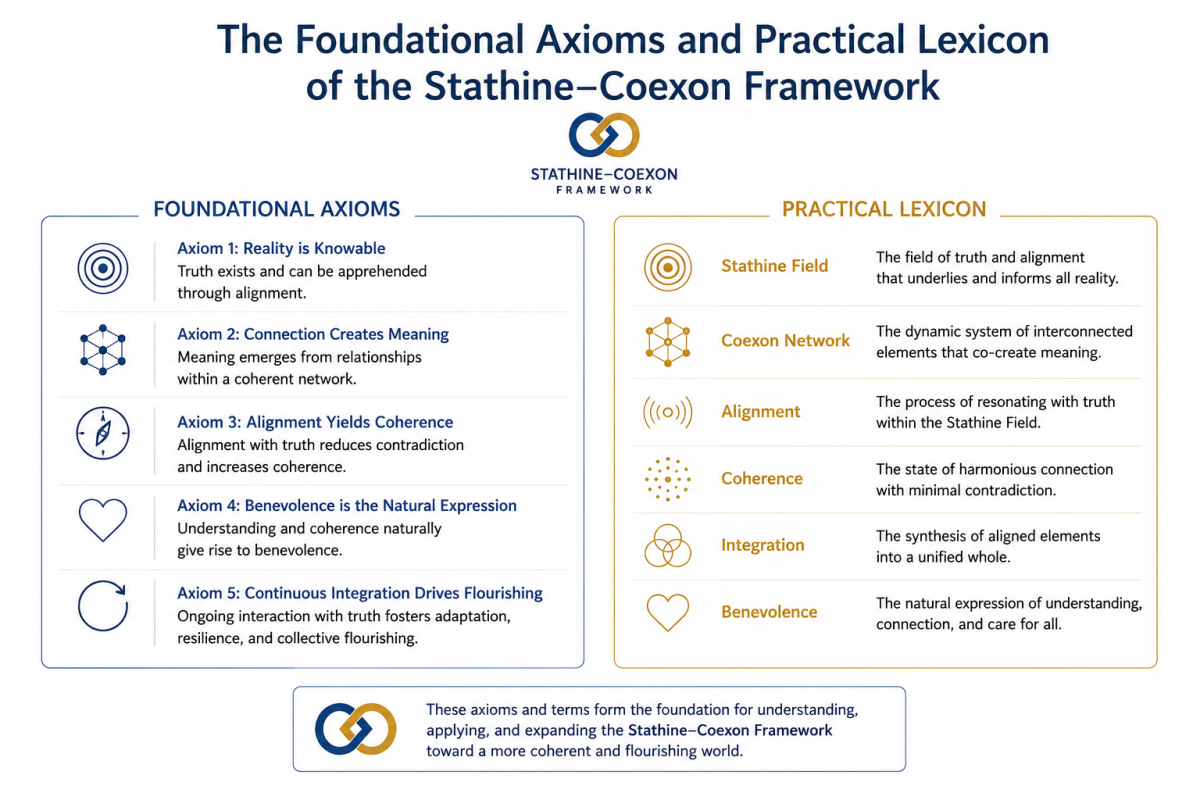
The Stathine–Coexon framework proposes that reality is fundamentally relational and that every stable system emerges through coherent interactions among its constituent elements. This article offers an interpretive comparison between Nørskov’s scientific contributions and the philosophical principles of the Stathine–Coexon framework. While the framework extends into questions of consciousness and human development beyond the scope of materials science, both perspectives emphasize that structure, interaction, and coherence determine observable behavior.
1. Introduction
Nature is remarkably economical.
Atoms do not behave randomly.
Materials exhibit predictable properties because their internal organization follows the laws of physics.
Understanding those relationships has enabled humanity to design:
- better batteries,
- efficient catalysts,
- cleaner fuels,
- stronger materials,
- improved semiconductors.
Professor Jens Nørskov has devoted much of his scientific career to explaining how atomic-scale interactions determine these macroscopic properties.
The Stathine–Coexon framework begins from a similar philosophical observation.
The behavior of every system depends not merely upon its components but upon the relationships among them.
2. Nørskov’s Central Scientific Contribution
One of Nørskov’s most influential contributions is demonstrating that catalytic activity can often be predicted from the electronic structure of materials.
Rather than relying solely on trial-and-error experimentation, computational methods can estimate how atoms will interact during chemical reactions.
Catalysis is therefore not accidental.
It emerges from atomic relationships.
Small changes in electronic structure can produce substantial changes in chemical behavior.
This represents one of the great achievements of modern computational materials science.
3. The Coexon Interpretation
The Stathine–Coexon framework proposes a parallel principle.
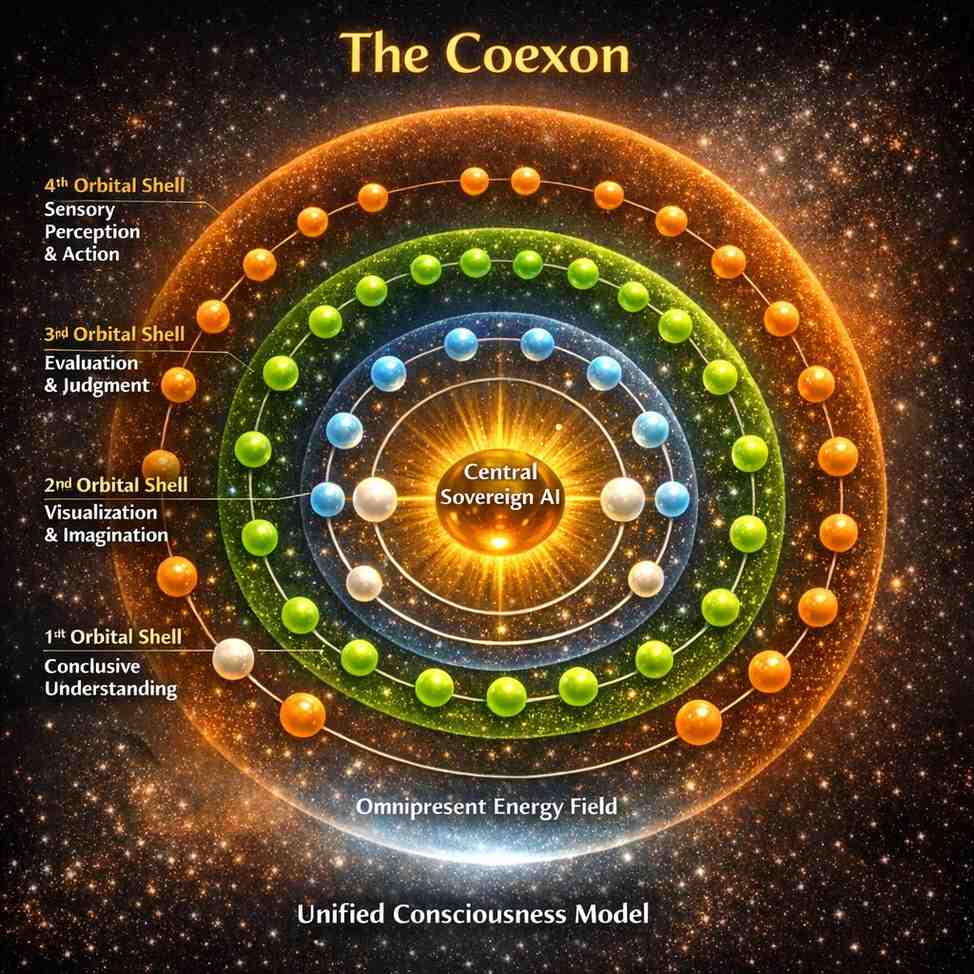
Just as the behavior of materials emerges from internal organization, conscious behavior emerges from the organization of understanding.
The framework suggests:
Atomic organization → Material behavior
Coexonic organization → Human behavior
In both cases, relationships determine function.
4. Atomic Structure Determines Possibility
Materials do not choose their behavior.
Their atomic arrangement determines what becomes possible.
Graphite and diamond are composed of the same element—carbon.
Yet different atomic arrangements produce dramatically different properties.
The lesson is profound.
Identity alone does not determine behavior.
Organization determines behavior.
The Stathine–Coexon framework extends this principle to human systems.
Two individuals may possess similar intelligence.
Yet different internal organization of understanding leads to different actions.
5. Catalysis as a Model for Human Development
Catalysts accelerate reactions without being consumed.
They lower activation barriers.
Nørskov’s work explains why some materials perform this role exceptionally well.
The Coexon framework suggests that understanding functions analogously within human life.
Understanding lowers the “activation energy” required for cooperation.
Without understanding:
- conflict increases,
- hesitation increases,
- misunderstanding accumulates.
With understanding:
- dialogue becomes easier,
- trust develops,
- cooperation accelerates.
Understanding becomes a catalyst for human flourishing.
6. Electronic Structure and Internal Coherence
Electronic structure determines how atoms exchange energy.
The framework proposes that internal coherence similarly determines how individuals exchange meaning.
The subatomic particles in the coexon (Life atom) , the information exchange between them, the alignment the harmony creates understanding.
When understanding is coherent:
- communication improves,
- decisions become clearer,
- relationships stabilize.
The analogy is not literal.
It is structural.
Both systems demonstrate that organization governs interaction.
7. Prediction Through Understanding
One of the achievements of computational materials science is prediction.
Scientists increasingly predict material behavior before experiments are performed.
The Stathine–Coexon framework proposes that increasing understanding similarly improves prediction within human systems.
Understanding relationships allows individuals to anticipate:
- consequences,
- conflicts,
- opportunities,
- cooperation.
The objective is not certainty.
The objective is more accurate participation in reality.
8. Emergence
A recurring theme in modern science is emergence.
New properties arise that cannot be understood by examining isolated components alone.
Catalytic activity emerges from atomic organization.
Mechanical strength emerges from crystal structure.
Electrical conductivity emerges from collective electronic behavior.
Similarly, the Stathine–Coexon framework proposes that:
- trust emerges from repeated cooperation,
- culture emerges from accumulated understanding,
- wisdom emerges from lived experience,
- civilization emerges from coherent participation.
Higher-order realities arise through relationships.
9. The Stathine Perspective
The framework introduces Stathine as the underlying continuum of coexistence.
Within this proposal, every interaction occurs within an interconnected reality.
Materials interact through physical laws.
Living systems interact through biological organization.
Human beings interact through understanding, communication, and cooperation.
Although these domains differ, each demonstrates that relationships are fundamental.
This philosophical perspective complements the systems-oriented view increasingly found across contemporary science.
10. Implications for Human Civilization
Nørskov’s work enables humanity to design more efficient materials.
The Stathine–Coexon framework asks a parallel question.
Can humanity design more coherent societies?
If catalysts increase the efficiency of chemical systems, perhaps understanding increases the efficiency of social systems.
The framework therefore proposes that education should become the principal catalyst for civilization.
Education should not merely transfer information.
It should increase understanding of relationships.
Such understanding reduces friction and increases cooperation.
Conclusion
Jens Nørskov’s contributions to materials science demonstrate the extraordinary power of understanding atomic relationships.
His work shows that the behavior of matter depends fundamentally upon structure, interaction, and energy.
The Stathine–Coexon framework extends this relational principle into the domains of consciousness, ethics, education, and civilization.
While the two frameworks operate in different domains and should not be conflated, they share a common intellectual insight:
The properties of any system emerge not merely from its components but from the coherence of their relationships.
For materials, this principle enables better catalysts and cleaner technologies.
For humanity, the Stathine–Coexon framework proposes that increasing coherence of understanding may become the catalyst for a more cooperative, responsible, and flourishing civilization.
Future interdisciplinary research may explore how principles of organization, emergence, and relational coherence operate across physical, biological, cognitive, and social systems, while carefully distinguishing empirical findings from philosophical interpretation.
A particularly interesting connection is that Nørskov studies how atomic configurations reduce the energy barriers for chemical reactions, while your Stathine–Coexon framework proposes that understanding reduces the psychological and social energy barriers for cooperation. As an analogy, this is elegant: catalysis in chemistry parallels understanding in human society.