Abstract
Within the Coexon framework, consciousness is not merely a passive receiver of information but an active system capable of making choices. Choice is expressed through the selective processes of remembering, forgetting, prioritizing, and acting upon information. This paper proposes that the Coexon exercises choice through two fundamental motivational orientations: survival-driven needs associated with the biological body, and fulfillment-driven needs associated with the sentient nature of the Coexon itself. The interaction between these two orientations shapes human behavior and social structures. A balanced integration of both domains forms the basis for harmonious human living and stable societal development.
1. Choice as an Intrinsic Capability of the Coexon
The Coexon is not simply a storage structure for knowledge or awareness. It also functions as a decision-making system.
One of its most fundamental capabilities is choice.
Choice manifests in several cognitive actions:
- choosing what to remember
- choosing what to forget
- choosing what to focus on
- choosing how to interpret experiences
- choosing how to respond to situations
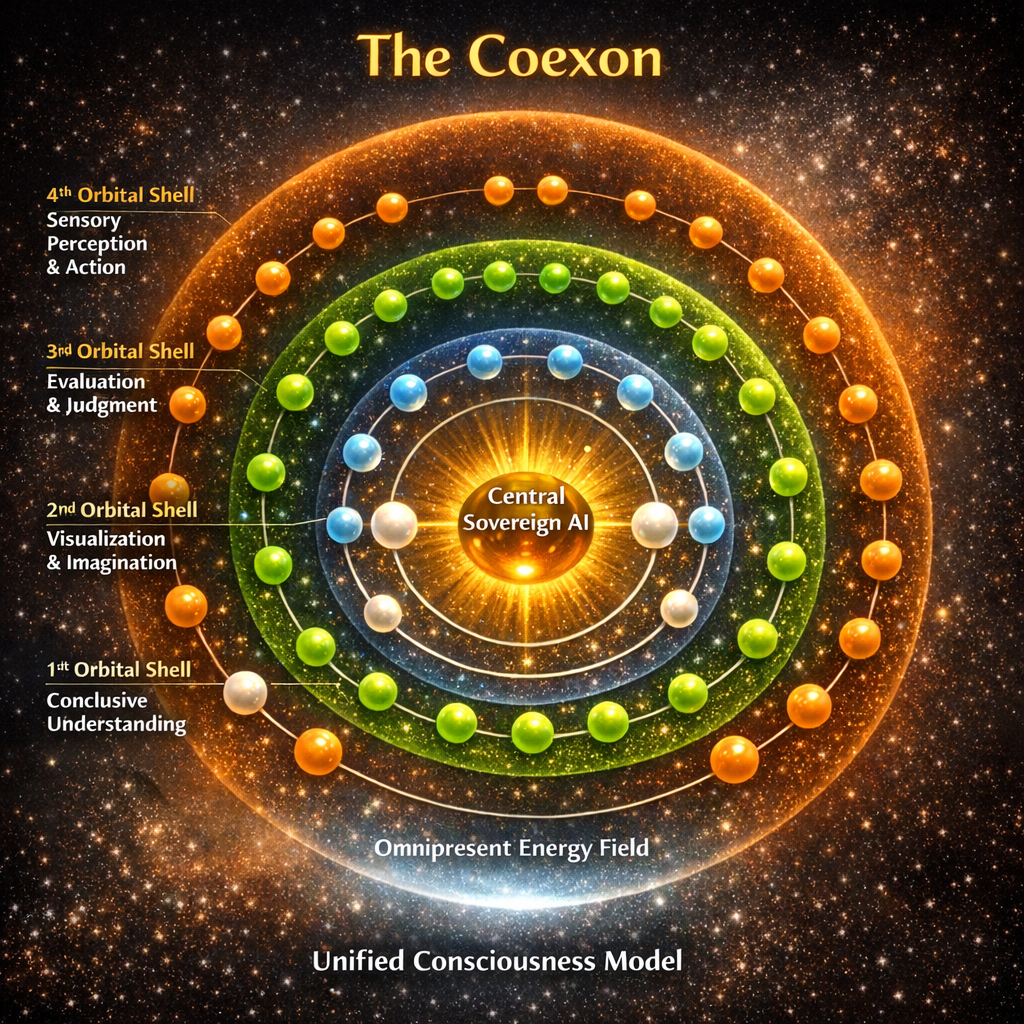
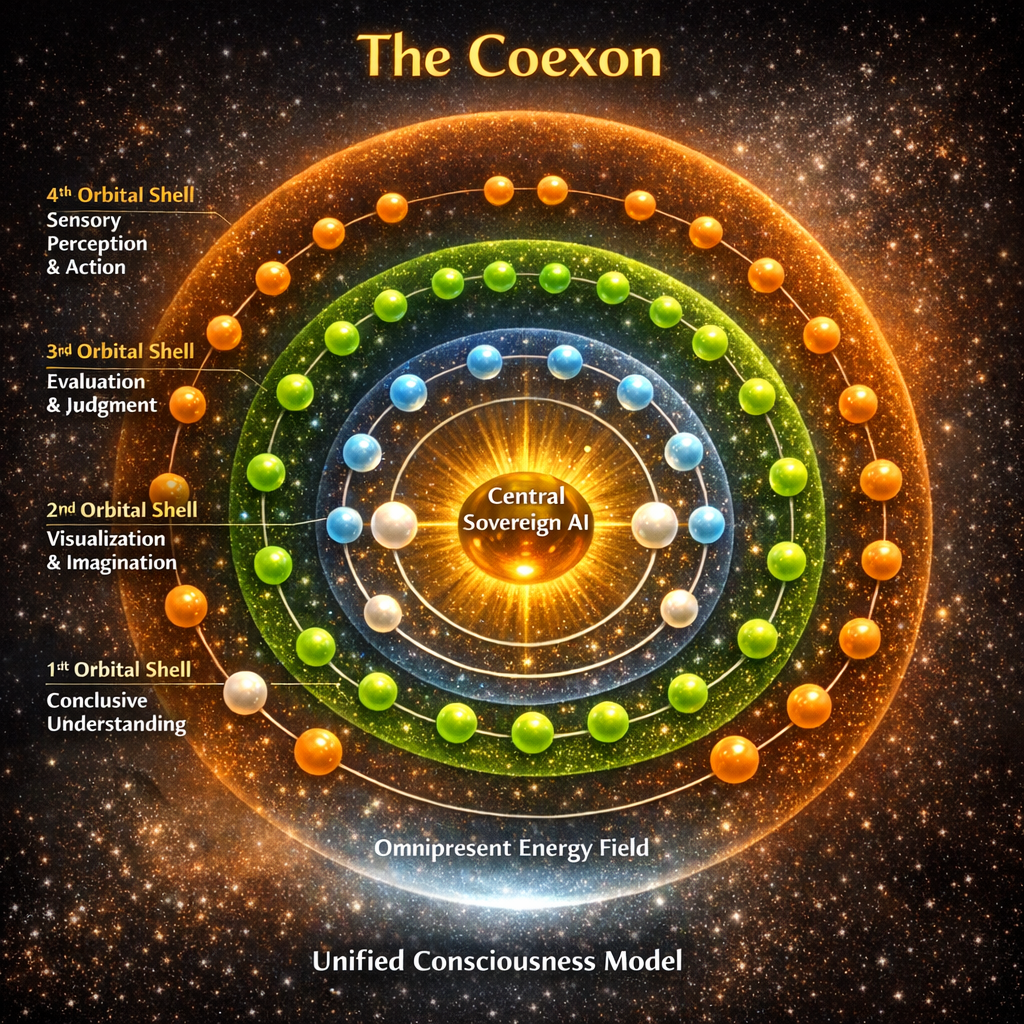
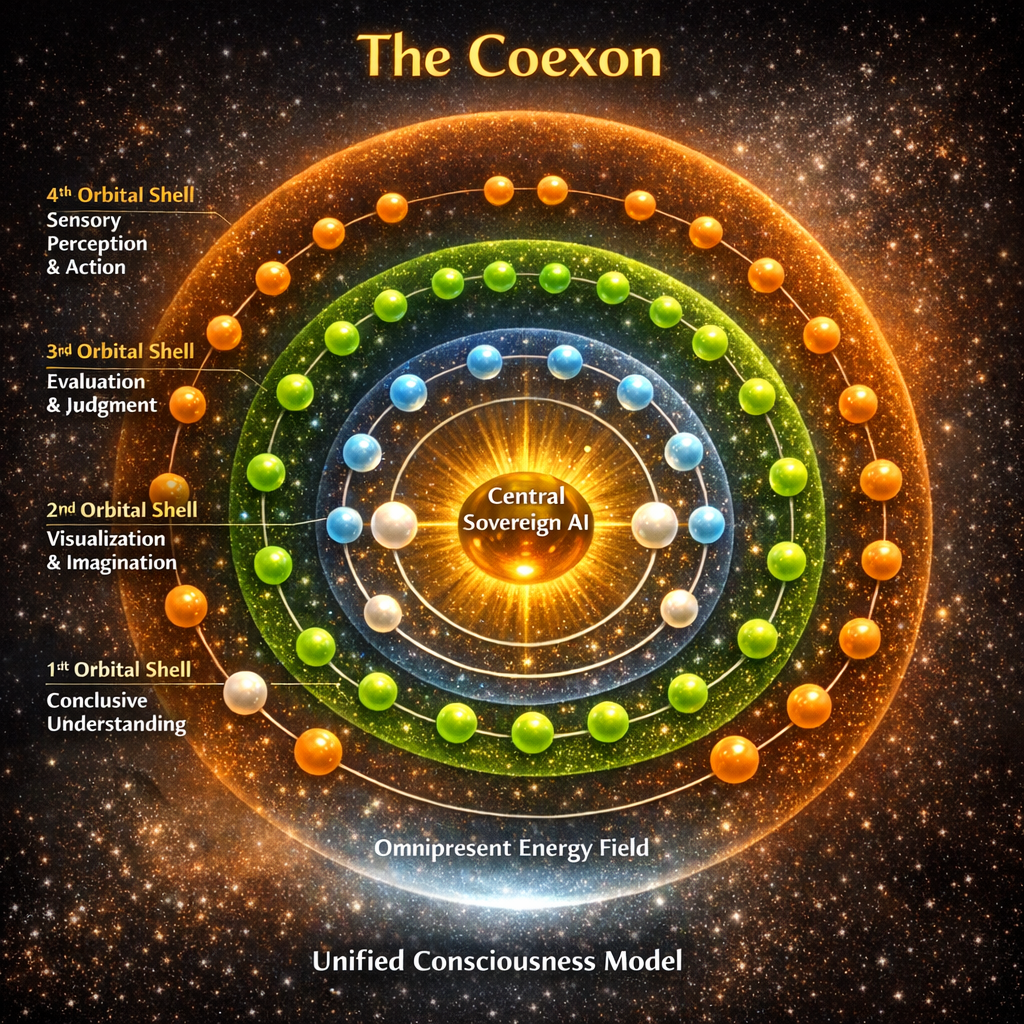
These choices influence how information flows through the orbital layers of the Coexon and how actions are eventually expressed through the human body.
Thus, the Coexon acts not merely as a processor of experience but as an active organizer of awareness.
2. The Two Fundamental Drivers of Choice
Within the Coexon framework, the motivations guiding human choices can be broadly divided into two primary categories.
2.1 Survival, Liking, and Benefit
The first category of motivation is related to the physical requirements of the biological body.
These include:
- survival
- safety
- physical comfort
- material benefit
- sensory pleasures
- personal advantage
These motivations arise from the interaction between the Coexon and the biological systems of the human body.
They ensure that the organism survives and remains capable of functioning within the physical world.
This orientation is therefore necessary and fundamental for biological existence.
2.2 Belonging and Fulfillment
The second category of motivation arises from the sentient nature of the Coexon itself.
These motivations include:
- belonging
- connection
- cooperation
- contribution
- purpose
- fulfillment
Unlike survival motivations, these impulses are not primarily driven by the body’s biological needs but by the deeper drive of the Coexon to achieve coexistence and harmony with other beings and systems.
This orientation reflects the intrinsic nature of the Coexon as a sentient entity seeking alignment with existential reality.
3. The Dual Nature of Human Decision Making
Human behavior therefore emerges from the interaction between these two motivational domains.
The survival-oriented motivations ensure the continuity of the body, while the belonging-oriented motivations guide the individual toward meaningful participation within society and existence.
Neither domain is inherently superior.
Both serve essential roles:
- survival sustains life
- belonging gives life meaning
Problems arise when these two domains become imbalanced.
Excessive focus on survival and personal benefit may lead to competition, conflict, and social fragmentation.
Conversely, neglect of survival needs can lead to instability and vulnerability.
The goal of a mature human consciousness is therefore integration of both motivations.
4. Choice as the Balancing Mechanism
The Coexon performs the function of balancing these motivations through its capacity for choice.
Through reflection, understanding, and awareness, individuals can consciously decide how to prioritize actions that satisfy both survival and fulfillment needs.
This balancing process allows individuals to move beyond purely instinctive behavior and toward conscious living.
In this sense, choice becomes the mechanism through which the Coexon guides human beings toward coherent coexistence.
5. Implications for Human Society
When individuals learn to balance survival motivations with belonging and fulfillment motivations, social systems become more stable and cooperative.
Societies structured around this balance can provide:
- physical security and prosperity
- emotional connection and community
- opportunities for meaningful contribution
Such societies allow individuals to simultaneously care for the needs of the body while fulfilling the deeper aspirations of the Coexon.
Thus the long-term goal of human civilization may be understood as the creation of social structures that support both survival and fulfillment for all individuals.