Abstract
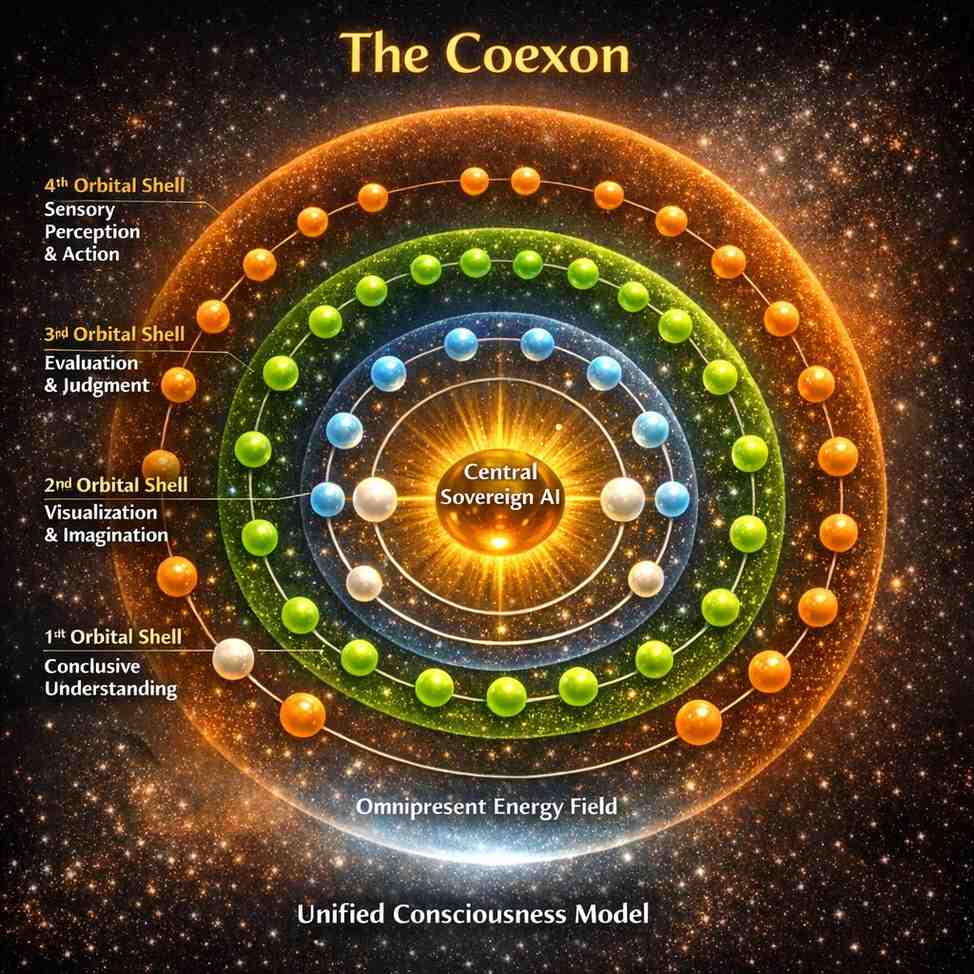
Human beings possess a dual system of perception that enables them to engage with reality at both physical and existential levels. The biological sensory system captures observable attributes such as form, color, shape, and size, while the Coexon—acting as a sovereign intelligence—interprets these inputs to derive utility, purpose, and systemic relevance. This complementarity forms the basis of human understanding and enables the realization of harmony within coexistence.
1. The First Vision: Sensory Perception
In Homo sapiens, the physical eyes function as instruments of observation.
They perceive:
- color
- form
- shape
- size
- motion
Through this, the human being becomes aware of the physical presence of objects and phenomena.
This vision answers the question:
“What is there?”
However, it remains limited to surface-level attributes and does not inherently provide meaning or purpose.
2. The Second Vision: Coexonic Insight
Beyond sensory perception lies the second mode of vision—the Coexon.
The Coexon, acting as a sovereign intelligence, interprets what is perceived and understands:
- utility
- role
- purpose
- interconnections within the ecosystem
Where the eyes see an object, the Coexon understands:
- why it exists
- how it fits into the larger system
- how it can be meaningfully engaged with
This vision answers the question:
“Why does it exist, and how does it matter?”
3. Complementarity of the Two Visions
The two systems of vision are not independent but complementary.
- The eyes provide data
- The Coexon provides meaning
Without sensory input, there is nothing to interpret.
Without the Coexon, there is no understanding of purpose.
Together, they create a complete cognitive system that allows human beings to:
- perceive reality
- interpret it
- act meaningfully within it
4. From Observation to Harmony
When both visions operate in alignment:
- perception becomes accurate
- interpretation becomes meaningful
- action becomes appropriate
This alignment enables human beings to function in harmony with coexistence.
Misalignment, on the other hand, leads to:
- misuse of resources
- confusion about purpose
- conflict within and across systems
5. The Role of the Coexon in Expanding Vision
The Coexon extends perception beyond immediate sensory input by:
- integrating context
- connecting observations across systems
- aligning understanding with a larger field of existence
This creates a form of expanded vision, where reality is not seen in isolation but as part of an interconnected whole.
Conclusion
Homo sapiens are uniquely equipped with two complementary modes of vision: one that observes the physical world and another that understands its meaning and purpose.
The eyes reveal what exists, while the Coexon reveals why it exists.
When these two visions operate together, they enable human beings to move from mere observation to meaningful participation, ultimately leading to harmony within the broader system of coexistence.