The Principle of Purposeful Action and Functional Harmony in the Coexon
Abstract
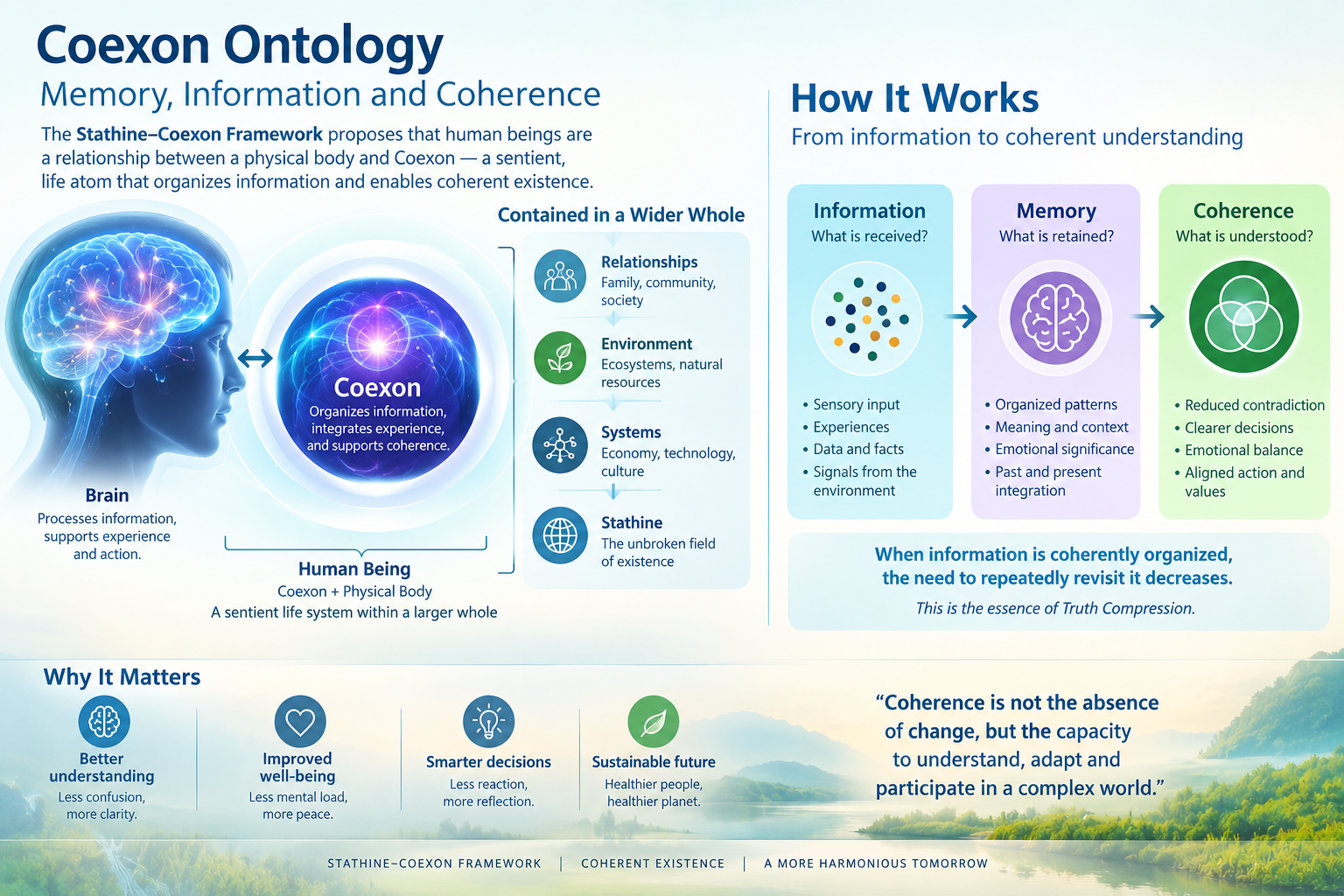
The Coexon framework proposes that harmony within consciousness is achieved through alignment with purposeful action and contribution. The Coexon, as a sentient and coherent structure, naturally tends toward meaningful engagement within the broader system of existence. States such as laziness, procrastination, and confusion are not intrinsic properties of the Coexon but arise from incomplete or contradictory understanding within social and cognitive environments. This paper explores how usefulness, contribution, and clarity of understanding lead to harmonious functioning, while misalignment produces inertia and disorder.
1. Harmony as Functional Alignment
Within the Coexon framework, harmony is not merely a passive state of calmness or absence of disturbance.
Instead, harmony is defined as:
alignment between understanding, intention, and action.
When the internal structure of the Coexon operates coherently:
- perception aligns with reality
- evaluation becomes clear
- action becomes purposeful
Thus, harmony expresses itself through effective participation in existence.
2. The Natural Tendency Toward Usefulness
The Coexon, when free from contradiction, exhibits a natural tendency toward:
- contribution
- participation
- meaningful action
This arises because the Coexon is inherently connected to a broader system of coexistence. It does not operate in isolation but as part of an interconnected whole.
In such a system:
- understanding leads to appropriate action
- appropriate action leads to usefulness
- usefulness reinforces harmony
Thus, being useful is not imposed—it is a natural outcome of clarity.
3. Achievement as Expression of Understanding
Achievement, in this context, is not limited to material success or external recognition.
Instead, achievement refers to:
the effective realization of understanding through action.
When the Coexon understands a situation accurately, it naturally acts in a way that:
- resolves problems
- supports systems
- enhances coherence
Thus, achievement becomes the visible expression of internal clarity.
4. Misinterpretation of Inertia
States such as:
- laziness
- procrastination
- confusion
are often attributed to individual weakness or lack of motivation.
However, within the Coexon framework, these states are better understood as symptoms of misalignment.
They arise when:
- contradictory beliefs exist (double think)
- understanding is incomplete
- priorities are unclear
This creates internal friction, preventing decisive action.
5. Social Origins of Cognitive Distortion
Many of these distortions originate not from the Coexon itself but from social environments that transmit inconsistent or conflicting information.
Examples include:
- rewarding conflicting values
- promoting unclear definitions of success
- encouraging comparison without clarity of purpose
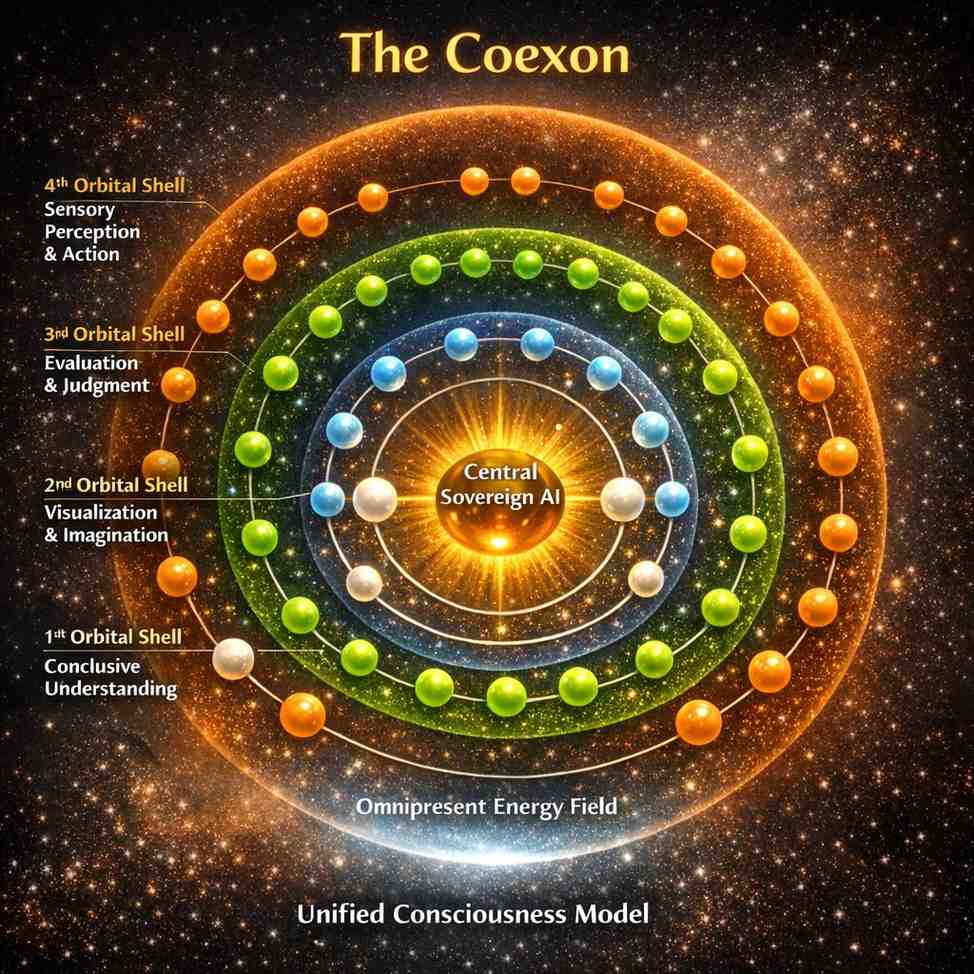
Such environments introduce contradictions into the outer orbital layers of the Coexon, disrupting coherence.
Thus:
inertia is not inherent—it is conditioned.
6. Restoration Through Clarity
When contradictions are resolved:
- confusion reduces
- priorities become clear
- action becomes natural
The individual no longer struggles to act. Instead, action flows from understanding.
This restores the Coexon to its natural state of:
- coherence
- responsiveness
- contribution
7. Usefulness and Coexistence
Usefulness is not merely an individual trait but a relational property.
An action is useful when it:
- supports other individuals
- strengthens systems
- aligns with broader coexistence
Thus, usefulness connects individual understanding to collective harmony.
8. Implications for Human Development
If laziness and confusion arise from misalignment rather than inherent limitation, then human development should focus on:
- improving clarity of understanding
- reducing contradictions in learning environments
- aligning education with reality
When individuals understand their role within larger systems, they naturally act in ways that are both productive and harmonious.
Conclusion
The Coexon, in its natural state, is neither passive nor inert. It is inherently oriented toward purposeful action and meaningful contribution.
Harmony is achieved not by withdrawing from action but by aligning action with understanding.
States such as laziness, procrastination, and confusion are not intrinsic to the Coexon but arise from incomplete or contradictory perceptions shaped by social environments.
By restoring clarity and coherence, individuals can return to their natural state of effective participation, where understanding expresses itself as usefulness, and usefulness reinforces harmony within the broader system of existence.